
CHILDBIRTH IS MIRACULOUS. I don’t mean in the specific sense that the conceptions of Isaac, or John the Baptist, or Jesus himself were miraculous. Their mothers—Sarah, Elizabeth, and Mary respectively–were all women who only became pregnant by the intervention of God. Once they did conceive, though, I assume they gave birth in the usual fashion; Scripture gives us no reason to think otherwise.
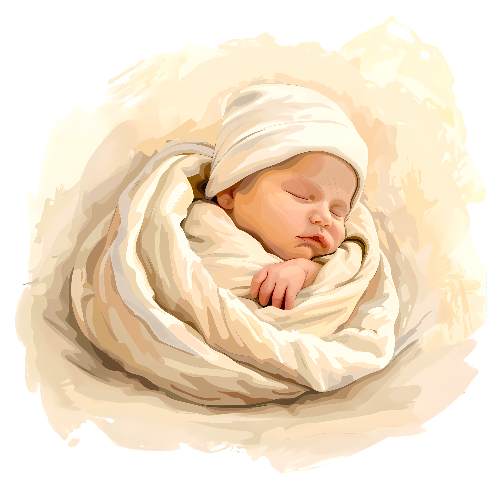
But childbirth is miraculous in the more general sense of being wondrous. I was present and involved in the births of both of my children, decades ago. Despite the sterile and highly medicalized environments in which they were born, despite the many years that have passed since then, I can still touch the fringes of the awe I felt as they came into the world. The miracle of new life; how was that possible? Try as we might to describe it in strictly scientific terms, we would have to deaden something in our spirits to not sense something of God’s creative hand in every birth.
As we’ve seen, Luke describes the angel Gabriel’s annunciations first to Zechariah and then to Mary: Surprise! You’re going to have a son, and God has some serious plans for him. After Mary received the news, she hurried off to see her older relative Elizabeth, whom the angel had said was already in her sixth month of pregnancy. When Mary greeted Elizabeth, the baby in her womb—the one who would be named John and who was already filled with the Holy Spirit—leaped for joy at the sound of Mary’s voice. Elizabeth, also filled with the Spirit, blessed Mary, and Mary in turn broke out in a song of praise.
After that, Luke gives the actual birth of John the Baptist only scant attention. Having recorded Mary’s Magnificat, Luke writes:
Mary stayed with Elizabeth for about three months and then returned home. When it was time for Elizabeth to have her baby, she gave birth to a son. Her neighbors and relatives heard that the Lord had shown her great mercy, and they shared her joy. (1:56-58, NIV)
That’s it: just a handful of words to describe what may have been the most important event in Elizabeth’s life. For years, she had endured the shame of childlessness. But now, her disgrace had been taken away. “She gave birth to a son,” Luke says. He could simply have said, “She gave birth.” But a son was promised, and a son was given, and in that cultural context, that was something worth extra celebration.
Was Mary present at the birth? Luke doesn’t specifically say this. But it seems as if he expects us to do the math: Let’s see… Elizabeth was already in her sixth month when Gabriel gave her the news. It would have taken some time for Mary to make the trip. Then she stayed with Elizabeth for about three more months before going home. And other relatives seem to have been there when the baby was born, so…
Chances are, Mary was there. Granted, it’s possible to read Luke as describing a time period just shy of a full nine-month gestation. And the fact that Luke mentions Mary’s return home before describing the birth does make it read as if Mary left before the baby was born.
But given the trouble Mary had gone through to make the trip and the unique bond she and Elizabeth shared, I find it almost impossible to believe that she would have left just when Elizabeth was getting ready to deliver. Again, Luke doesn’t have to follow a strict chronology in the narrative. He’s had the spotlight on Mary with the Magnificat, and will come back to her again when Jesus is born. Thus, he closes off Mary’s part of the story before turning the spotlight on Elizabeth.
. . .
BOTH MY KIDS were born in hospital maternity wards. The only people present were me, my wife (obviously), and any necessary staff. There were no other family members, no neighbors or friends.
This is very different from what Elizabeth probably experienced. John wasn’t born in a hospital, but in Zechariah and Elizabeth’s home. There were no doctors, surgeons, or anesthesiologists, but one or more midwives. Elizabeth didn’t lie on a hospital bed, but may instead have squatted or used a birthing chair designed for the purpose. And she would have been attended by other women, particularly relatives, of which Mary may have been one.
The advantage of the modern medicalization of childbirth is the drastic reduction in both maternal and infant mortality rates. But childbirth has also become a more private affair instead of a communal event. When Luke says that Elizabeth’s neighbors and relatives “heard that the Lord had shown her great mercy” and therefore “shared in her joy,” that doesn’t mean they read about it on social media and sent their emoji-laden congratulations electronically. Elizabeth didn’t give birth alone, but surrounded by friends and family.
And as we’ll see soon, the same was true of Mary.
Any birth was cause for celebration. The birth of a son, even more so. And the birth of a son when conception itself should have been impossible? That’s the most joyous of all. Did the people celebrating with Elizabeth know the whole story? Had they heard what Gabriel said to Zechariah in the temple? Did the other priests who were there tell anyone what they had seen and heard? Luke doesn’t say.
But the people didn’t need to be told that Elizabeth had been the recipient of an act of divine favor. Every birth is a miracle in its own right, but this one was especially so, and they knew it. They rejoiced with her, they rejoiced for her—and as they did, Elizabeth’s burden of disgrace was finally and graciously lifted.

