
I’M SURE YOU’VE NOTICED: some songs have staying power, even when they’re nothing more than commercial jingles. If you’re like me, every so often you’ll get one of these annoying little earworms playing on an endless loop in your head. Mine are typically from my childhood or adolescence, and the lyrics can be downright silly. The products may not even exist anymore, yet the tunes are still sticky all these years later.
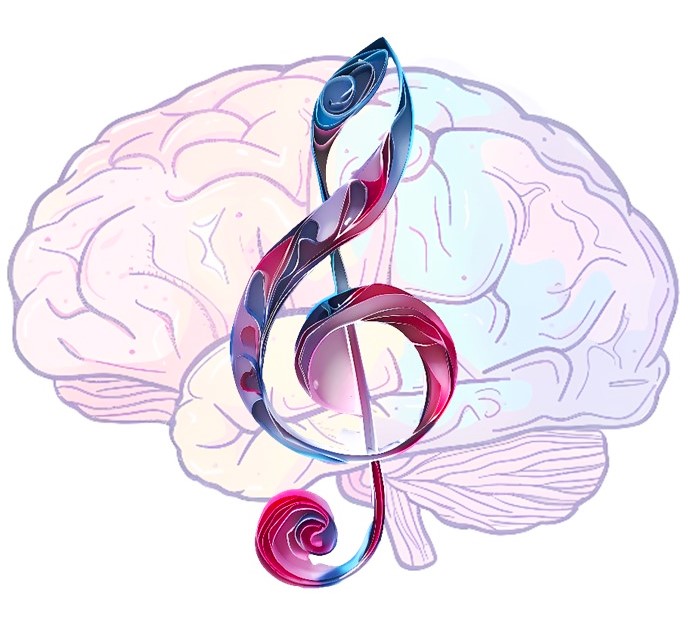
I can’t completely blame Madison Avenue for this; advertisers are simply making use of the way our brains work. Music can stimulate several brain regions at once. It’s not simply about how it sounds, but the memories and feelings associated with it. Music that stirs particular emotions can be used therapeutically or as an aid to memory.
More importantly, music can even be deeply tied to our sense of identity. The songs of your childhood may have deep emotional significance for you. Or particular hymns or worship songs may come to mind when you’re struggling through some difficulty. I think of my last visit with someone who suffered a long, slow decline into dementia. In her final days, she simply lay in bed, uncommunicative, eyes closed as if in perpetual sleep. But if you stood at her bedside and sang a classic hymn, she would open her eyes; in her own feeble way, she would try to sing along, waving her hands as if conducting the music.
I say all this because I want us to take seriously the place of the songs of both Mary and Zechariah in Luke’s opening chapter. It’s not background music. It’s not for entertainment purposes. The songs draw upon the shared stories and memories of a people. In essence, they’re a performance of identity, linking the present to both a storied past and a prophesied future, a history of God’s faithfulness to his people.
Mary’s song, for example, begins with her present joy:
My soul glorifies the Lord
and my spirit rejoices in God my Savior,
for he has been mindful
of the humble state of his servant.
From now on all generations will call me blessed,
for the Mighty One has done great things for me—
holy is his name. (Luke 1:46-49, NIV)
Here, she echoes Elizabeth’s prophetic blessing: “Blessed is she who has believed that the Lord would fulfill his promises to her!” (vs. 45). To Mary, it’s not just a compliment; it’s a confirmation that she has been chosen by God to play a role in a much larger story of salvation. All the generations to come, not just Elizabeth, would therefore call her blessed.
Again, there’s nothing in Luke’s narrative that would suggest that Mary was a person of any status or someone of whom one might expect great things. Indeed, quite the opposite: she praises God for paying attention to her “humble” state. When we hear the word “humble,” we may think of someone who isn’t vain or boastful, someone who doesn’t seek the limelight, someone who deflects praise. In Scripture, however, the concept is better represented by the related word “humiliated”; it suggests someone of low status or someone who has been brought low by their circumstances.
Mary then turns immediately from what God has done for her to the larger story. In verse 52, for example, she declares that God “has lifted up the humble”; what God has done for her is but one instance of how God has always dealt with his people. The whole context of that verse portrays God as the divine warrior who overturns the pretentious ways of seemingly powerful people:
His mercy extends to those who fear him,
from generation to generation.
He has performed mighty deeds with his arm;
he has scattered those who are proud in their inmost thoughts.
He has brought down rulers from their thrones
but has lifted up the humble.
He has filled the hungry with good things
but has sent the rich away empty.
He has helped his servant Israel,
remembering to be merciful
to Abraham and his descendants forever,
just as he promised our ancestors (vss. 50-55)
Note how this part of the song is framed by the idea of God’s mercy. In the context of the Old Testament, the word points to the dependable, compassionate, faithful way God worked on behalf of his beloved covenant people. That included rescuing his people from those who would oppress them. On the one hand, that meant bringing down rulers and thwarting the arrogance of the rich and proud. On the other, it meant lifting up the humble and filling the hungry, both of which were ways of referring to God’s beleaguered people.
Virtually everything Mary says echoes ancient texts from the Old Testament. For example, when Mary sings that God’s “mercy extends to those who fear him, from generation to generation,” we might hear an echo of Psalm 103:17: “But from everlasting to everlasting the LORD’s love is with those who fear him.”
When she sings that God “has filled the hungry with good things,” we might hear Psalm 107:9: “for he satisfies the thirsty and fills the hungry with good things.” Mary’s words here may also echo the prayer or song of Hannah, the mother of Samuel. In 1 Samuel 2:5, Hannah sings, “those who were hungry are hungry no more.” More generally, like Mary, Hannah also celebrates God as the divine warrior, the sovereign one who surprisingly exalts the humble:
The LORD brings death and makes alive;
he brings down to the grave and raises up.
The LORD sends poverty and wealth;
he humbles and he exalts.
He raises the poor from the dust
and lifts the needy from the ash heap;
he seats them with princes
and has them inherit a throne of honor. (1 Sam 2:6-8)
Indeed, many have seen Mary’s song as dependent on Hannah’s—though I think this overstates the case. It may be true that Mary had Hannah in mind as she sang. But that’s not a matter of dependence, as if Mary was merely trying to put Hannah’s song into her own words.
The better way to say it is that Hannah’s song, along with the Psalms and other sacred texts, were part of Mary’s education growing up; they formed her identity and her understanding of God. Confronted with God’s gracious blessing and Elizabeth’s confirmation of it, Mary rejoiced in the way she had been taught to rejoice: glorifying God for his mercy and salvation, praising him both for what he had done and what he would yet do.
Her song expressed and added to a longstanding tradition of praise, and yes, the generations since have called her blessed.

