

THUS FAR IN LUKE, much of the ministry of Jesus has been teaching in the synagogues of Galilee on the Sabbath. Luke tells us in chapter 4 that it was through his preaching that he first built his reputation among the people (vs. 15). Jesus also did many healing miracles, of course. But his own understanding of his mission seemed to emphasize the proclamation of good news.
Reading from the scroll of Isaiah in his hometown synagogue, for example, Jesus declared, “The Spirit of the Lord is on me, because he has anointed me to proclaim good news to the poor” (Luke 4:18, NIV). Later, when the people of Capernaum tried to keep him in town, he said, “I must proclaim the good news of the kingdom of God to the other towns also, because that is why I was sent” (vs. 43). And in case any of his readers missed the point, Luke adds that Jesus “kept on preaching in the synagogues of Judea” (vs. 44).
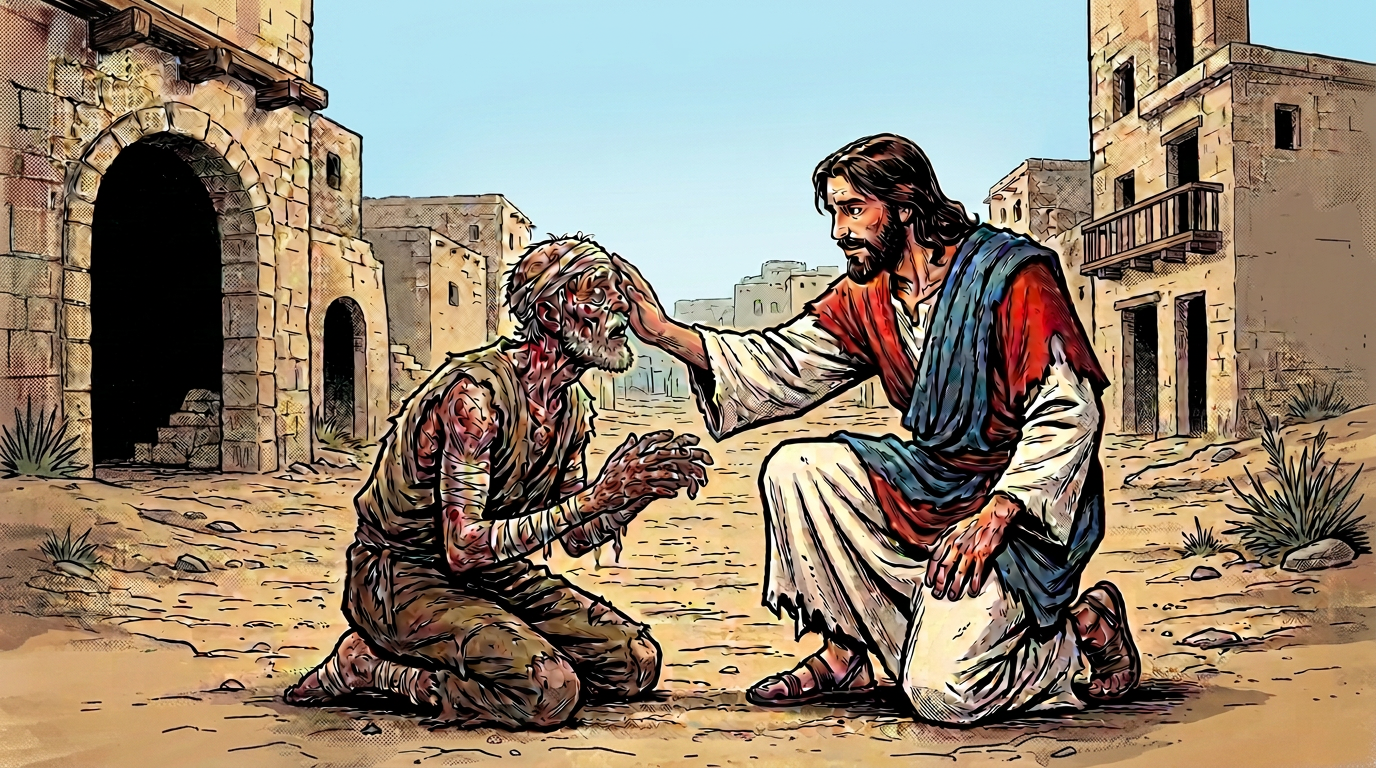
The next ministry vignette, as we’ve seen, was to heal a man with a severe case of leprosy. He had suffered bodily from the ravages of the disease, and no doubt emotionally as well, from being declared unclean and forced to live outside the town limits. That was no barrier to the compassion of Jesus. He physically touched the man, and spoke two simple words of command: “Be clean!” With that, the man was instantaneously and completely healed (Luke 5:12-13).
But the man couldn’t return to his previous life just yet. The Law of Moses prescribed very specific procedures for reinstating a leper into the community. Luke says:
Then Jesus ordered him, “Don’t tell anyone, but go, show yourself to the priest and offer the sacrifices that Moses commanded for your cleansing, as a testimony to them.” (Luke 5:14)
The required sacrifices are described in Leviticus 14:1-32. They were both elaborate and costly, though special provisions were made for the poor. An initial sacrifice involving two birds was to be done outside the camp. One bird was killed over a bowl of water. The other was dipped alive in the bowl of bloody water and released into the wild. Some of the blood was also sprinkled on the person seven times. The person had to bathe, wash their clothes, and shave off all their hair right down to the eyebrows. At that point, they were allowed back into the camp, but had to live outside their tent for a week. At the end of the week, they had to repeat the bathing and shaving.
On the eighth day, more offerings were made: three lambs (two male and one female), flour, and olive oil. The animals were slaughtered and sacrificed to make atonement for the person’s sins, and the person was marked with some of the blood and oil.
What matters in Luke’s story, however, is not the elaborate nature of the sacrifices to be made, but the fact that by following the Law of Moses, the former leper had to appear before a priest, who was needed to officially certify that the man was free of leprosy, making the priest a witness to the miraculous healing.
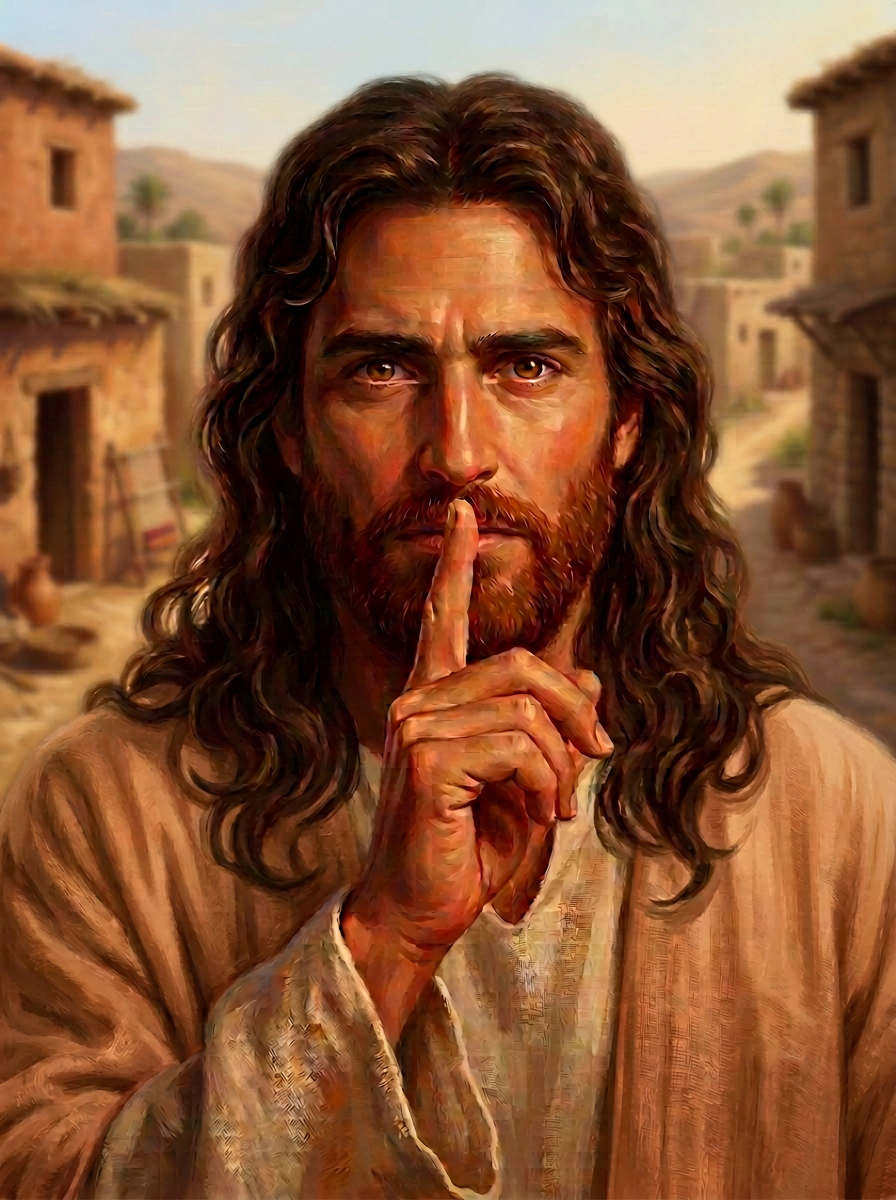
Would anybody else be a witness? Here again we stumble across the idea of the so-called “messianic secret.” In chapter 4, Jesus commanded the demons he cast out to stop shouting out his identity as God’s Son or the Messiah. Here, he gives a similar order to the former leper. The word Luke uses suggests an authoritative command by someone who expects to be obeyed. Luke uses the word again in Acts 4:18, for example, to describe how the Sanhedrin ordered the apostles to stop preaching in the name of Jesus.
Not surprisingly, however, it wasn’t long before everyone knew what had happened:
Yet the news about him spread all the more, so that crowds of people came to hear him and to be healed of their sicknesses. But Jesus often withdrew to lonely places and prayed. (Luke 5:15-16)
Did Jesus really expect the man to stay silent? Let’s assume that even if the man had been ostracized from his community, people like his family members and former neighbors would still recognize who he was.
Let’s also assume that his leprosy—again, apparently a severe case—was disfiguring in some way. His face may have been swollen and distorted, his fingers stubby and twisted, his skin covered with festering sores. Then, suddenly, he reappears in town, completely healed. His skin is clear and blemish-free; his face is just as it was before the disease took hold. How would people react?
I’m pretty sure people would not just look at him and say, “Hey, Yousef! Long time no see. Let’s catch up sometime, okay?” Rather, they would look, then look again, unable to believe what they were seeing. And then they would ask: “Yousef? Is that you? You look fantastic! How did it happen?”
And how would Yousef answer such questions? Would he clam up and say, “Uh, sorry, it’s a secret”?
Luke leaves the matter open-ended, saying nothing about how people found out the truth. But Mark tells us. After Jesus warned the man to keep quiet, Mark says:
Instead he went out and began to talk freely, spreading the news. As a result, Jesus could no longer enter a town openly but stayed outside in lonely places. Yet the people still came to him from everywhere. (Mark 1:45)
That way of telling the story gives us a hint as to why Jesus might urge the man to silence. It’s not that he didn’t want his identity as the Messiah to be known, but that he wanted that information to be revealed in a way that aligned with the Father’s will and timing. The gossip and buzz surrounding the miracles was making Jesus into a celebrity, such that he could no longer show his face in a town without being mobbed. That, in turn, made it difficult for him to continue his ministry of teaching in the synagogues, and from this point forward in Luke, all such preaching will be accompanied by a healing miracle.
Surely, the man could not be faulted for excitedly telling others what Jesus had done. But it made it that much more important for Jesus to find times for solitude and prayer. Unlike many believers today, Jesus had no desire for celebrity, and I imagine that those times of prayer helped keep him centered.
Those who claim to follow him should follow his example.

