

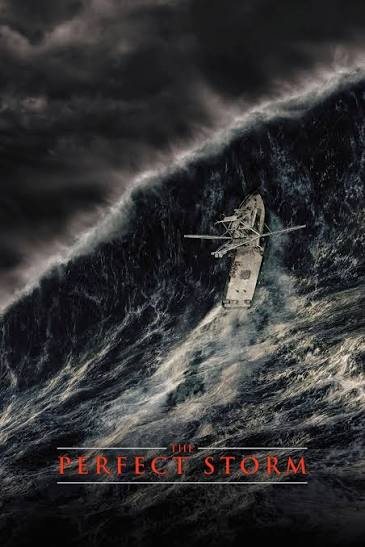
SEBASTIAN JUNGER’S BOOK, The Perfect Storm, reconstructs the tragic true story of a fishing boat called the Andrea Gail and its crew of six. If you haven’t read the book, you may have seen the movie; it starred George Clooney and was released in 2000.
The title refers to a rare meteorological event in which weather systems collide and merge into one monstrous and deadly storm. The Andrea Gail, a commercial swordfishing boat, got trapped in such a storm; experts suggest that the waves may have been as high as a ten-story building.
The crew were all experienced sailors. But they had put far out to sea in search of a good catch of fish that they needed to pay their bills. They brought in a good haul, but the ice machine on the boat wasn’t working. If they didn’t make it back to port, their prize catch would spoil. So they took the risk, braving the storm, and paid with their lives. The Andrea Gail has never been found.
I’m reminded of this when I read the story at the beginning of Luke 5. Like farmers whose livelihoods depended on a good harvest, Peter and his companions were fishermen whose livelihoods depended on a good catch. Imagine his frustration, then, as we return to the story we began last time. Jesus has been sitting and teaching the crowds from Peter’s boat, a little way out from the shore. Luke continues:
When he had finished speaking, he said to Simon, “Put out into deep water, and let down the nets for a catch.” Simon answered, “Master, we’ve worked hard all night and haven’t caught anything. But because you say so, I will let down the nets.” (Luke 5:4-5, NIV)
Imagine that you’re a professional who’s worked hard at a project that hasn’t turned out. How would you take it if someone who knew nothing about your craft started making suggestions about what you should do differently? If it were me, I’d be thinking, What do you know about it? This is what I do for a living. Why should I listen to you?
As translated in the New International Version, however, Peter addresses Jesus as “Master,” and Luke is the only writer in the New Testament to use the word. Most likely, Peter called Jesus “Rabbi,” as the disciples typically do in Matthew and Mark. But Luke gives his Gentile readers a Greek word to which they can relate more easily; it suggests someone in charge, like a military commander.
Peter, in other words, recognizes Jesus’ authority. And why not? In Peter’s own home, Jesus healed not only his mother-in-law but numerous other villagers who came to the door throughout the evening.
Still, I hear doubt and resignation in Peter’s words: Okay, Jesus, if you say so. You’re the boss. But we know what we’re doing and have been trying all night. I tell you, there’s nothing there.
Moreover, some scholars believe that Peter and the others were using nets made of linen, which would have been visible to the fish during the day. Peter may have thought that even if there were fish to be caught—a big “if”—they would see the net and avoid it. I imagine Peter sighing wearily as he and his crew let down the nets again. You know what happened next:
When they had done so, they caught such a large number of fish that their nets began to break. So they signaled their partners in the other boat to come and help them, and they came and filled both boats so full that they began to sink. (vss. 6-7)
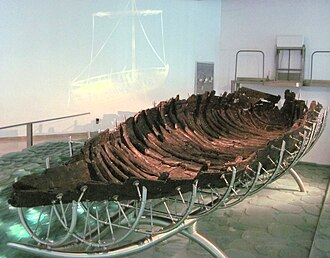
Don’t picture Peter and his companions in a rowboat. In 1986, an ancient fishing boat now known as “the Jesus Boat” was discovered along the shore of the Sea of Galilee. It had lain hidden beneath the surface of the lake until a drought caused the waters to recede. The remains are 27 feet long and 7-1/2 feet wide.
Were Peter and the others in boats like this? If so, that’s a lot of fish. There were so many that the threads of the linen net began to snap. Nets were indispensable and expensive, and Peter needed help. James and John were nearby, in another boat; Zebedee and possibly some hired men may have been there too (see, for example, Mark 1:20). They rushed to the aid of Peter and his crew, saving the nets and taking on so many fish that the boats began to sink.
Peter was no stranger to Jesus’ power to do the miraculous. But this miracle was tailor-made to capture the heart of a fisherman. Luke describes Peter’s astonished reaction:
When Simon Peter saw this, he fell at Jesus’ knees and said, “Go away from me, Lord; I am a sinful man!” For he and all his companions were astonished at the catch of fish they had taken, and so were James and John, the sons of Zebedee, Simon’s partners. (Luke 5:8-10a)
Jesus is probably still sitting. Overcome with awe and keenly aware of how he had doubted Jesus’ command, Peter drops to his knees, right there among the squirming catch of fish. “Go away from me, Lord!” he says. He’s not actually telling Jesus to leave—but he feels spiritually naked, a sinful man in the presence of the holy. Peter may have been the only one to speak, but everyone was astonished, including James and John.
I picture Jesus smiling and laying a hand on Peter’s shoulder as he responded with the now-familiar line:
Then Jesus said to Simon, “Don’t be afraid; from now on you will fish for people.” So they pulled their boats up on shore, left everything and followed him. (vss. 10b-11)
Jesus doesn’t tell Peter that he needn’t be afraid because his sin isn’t all that bad. Rather, Jesus wants Peter to know that he’s chosen him nonetheless. The invitation, moreover, isn’t just for Peter, but James and John, and possibly for Peter’s brother Andrew, who was also part of the fishing business and may have been with them. In Mark’s gospel, all four had already been called, and it’s at this point, perhaps, that they’re ready to follow Jesus with a capital F, leaving the life of fishing behind.
And why not? After all, if this is what happens when they’re with Jesus and fish for fish, what will happen when they fish for people?

