

JESUS ONCE TOLD his disciples, “The poor you will always have with you” (Mark 14:7, NIV). If he were speaking today, he might have said “homeless.”
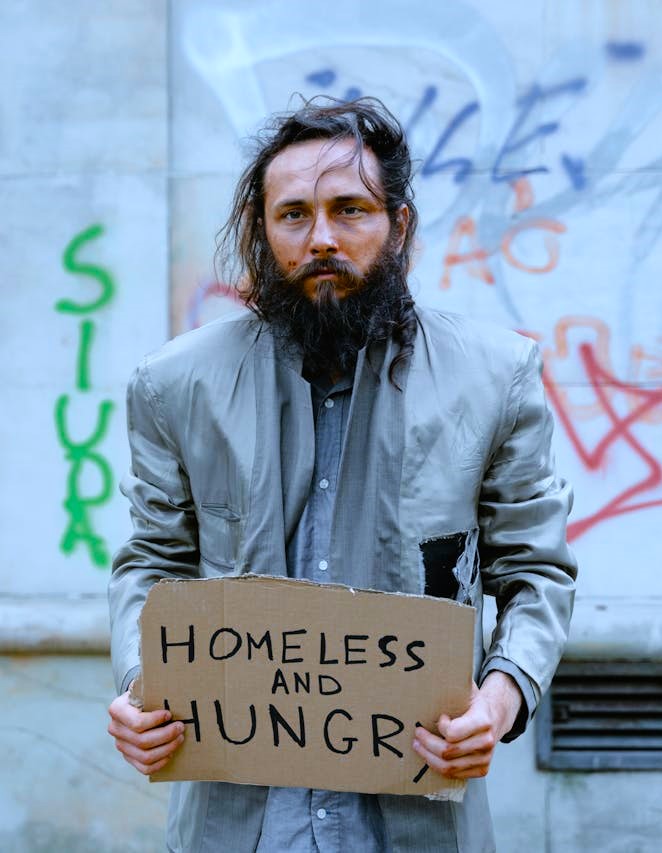
Rates of homelessness vary tremendously from country to country. But estimates put the worldwide figure for homelessness somewhere between 100 and 150 million. In addition, Habitat for Humanity has estimated that over one and a half billion people lack proper housing.
The causes of homelessness are many. The devastation of war is an obvious one. What’s less obvious is the way war can send a country’s economy into a tailspin, making it difficult for people to keep their homes even when they haven’t been destroyed.
Victims of domestic violence face their own traumatizing battleground, and may become homeless when they finally find the courage to escape an abusive relationship. People who struggle with addictions and mental illness often find themselves trapped in a never-ending cycle that goes from incarceration to the street and back again. And in general, in places where unemployment is high and the availability of affordable housing is low, it becomes increasingly difficult to find a stable place to live.
This is not just a modern problem. Some form of homelessness has probably existed throughout history, even in ancient times and cultures. And indeed, Psalm 107 seems to describe such a situation:
Some wandered in desert wastelands,
finding no way to a city where they could settle.
They were hungry and thirsty,
and their lives ebbed away.
Then they cried out to the LORD in their trouble,
and he delivered them from their distress.
He led them by a straight way
to a city where they could settle.
Let them give thanks to the LORD for his unfailing love
and his wonderful deeds for mankind,
for he satisfies the thirsty
and fills the hungry with good things. (Ps 107:4-9)
Psalm 107, as we have seen, opens by calling God’s people to give thanks for his hesed, for his lovingkindness or mercy. It ends with the admonition, “Let the one who is wise heed these things and ponder the loving deeds (i.e., the hesed) of the LORD” (vs. 43). Toward that end, the psalm presents four stories of redemption; the one we just read is the first.
“Wandering in desert wastelands.” This is language with which the psalmist’s readers would easily identify. Throughout much of the Old Testament narrative, after all, the Israelites were a nomadic people, living in tents, skirmishing with neighboring kingdoms, longing for the land promised to Abraham, a place of their own where they can put down roots and flourish.
But even apart from that historical context, the imagery of the psalm evokes something fundamental, a basic need for food and shelter. The people wander like vagabonds in an unforgiving environment where they can find nothing to eat or drink, no way to feed their families. On the brink of starvation, they cry out to God — and are rescued. Their path no longer weaves pointlessly back and forth; God brings them by a straight path to a place they can now call home.
Later, summarizing the merciful acts of God, the poet again uses similar imagery and builds upon it:
He turned the desert into pools of water
and the parched ground into flowing springs;
there he brought the hungry to live,
and they founded a city where they could settle.
They sowed fields and planted vineyards
that yielded a fruitful harvest;
he blessed them, and their numbers greatly increased,
and he did not let their herds diminish. (vss. 35-38)
The people no longer live in a harsh and lifeless desert. They’ve settled down in a place where they can keep herds, plant crops, and live off a bountiful harvest. They can not only feed their children, but have more children, because their future is secure.
The wise, however, will do more than merely ponder God’s love and mercy; they will also ponder God’s justice. Yes, God can mercifully turn a desert into a well-watered and fruitful land. But before saying this, the psalmist warns that God can also do the reverse:
He turned rivers into a desert,
flowing springs into thirsty ground,
and fruitful land into a salt waste,
because of the wickedness of those who lived there. (vss. 33-34)
As we see throughout the psalms, God punishes the wicked and arrogant, but saves and blesses those who are needy and afflicted. Thus, in the face of these stories of both redemption and justice, the psalmist says, “The upright see and rejoice, but all the wicked shut their mouths” (vs. 42).

I AM REMINDED once again of the teaching of Jesus, specifically what’s known as the Sermon on the Plain in Luke 6. A great crowd had gathered around Jesus, both to be healed and to hear him speak. Looking at his followers, he declared that the poor, the hungry, those who weep, and those who are hated by others were all blessed by God. But then he added the flip side of that teaching, declaring woes upon the rich, the well-fed, those who laugh, and those who are esteemed by others.
This is as countercultural a teaching as one can imagine, for any time or place. Who wants to be poor and hungry? Who wouldn’t rather be rich and have a full stomach? Who wouldn’t rather laugh than cry? And why wouldn’t anyone want others to think well of them, instead of being the object of hatred and scorn?
Jesus is not, of course, saying that there is anything intrinsically “blessed” about being poor, hungry, and the like — that would be a contradiction of the wisdom of Psalm 107. Rather, I understand Jesus to be teaching his followers what it means to truly believe in a God of both mercy and justice. The needy and destitute are blessed, not because poverty is particularly pleasant, but because God cares about them and answers their cries.
Conversely, there’s nothing intrinsically wrong with enjoying a good meal or a good reputation. What Jesus is describing here, in a way that fits with his other teachings about wealth, is something akin to a worldly vision of the pursuit of happiness and success. After all, who needs God when they already have everything they want in life? Even if a person feigns devotion to God, how they live will show what they truly value and believe.
That includes how the rich treat the poor. Do the rich look down upon the poor or treat them with contempt? Do they blame the needy for somehow deserving their unhappy state? Or do they realize with the psalmist that God shows mercy to the needy and judges the arrogant?
The psalmist has much wisdom to teach us, if we have the ears to hear.
 Squinting through Fog ("The Fog Blog")