

Perhaps the best known and most beloved of all the psalms is the so-called Shepherd Psalm, Psalm 23. For some people the psalm has a somber feel, because the only time they ever hear it is at a funeral. That’s unfortunate, because the words and images of the psalm can be a great source of comfort at any time, not just when we’ve lost someone dear to us. Here’s the first part of the psalm, from the New International Version:
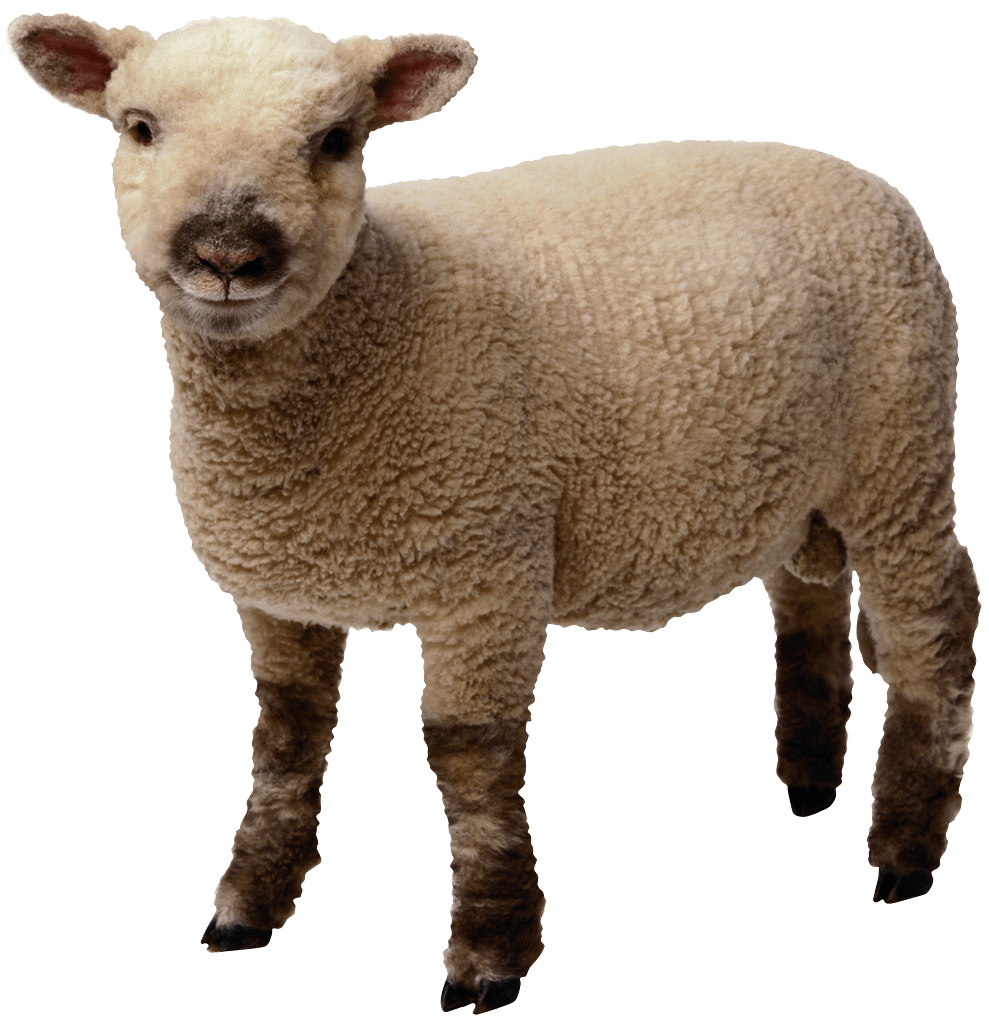
The LORD is my shepherd, I lack nothing.
He makes me lie down in green pastures,
he leads me beside quiet waters,
he refreshes my soul.
He guides me along the right paths
for his name’s sake.
Even though I walk
through the darkest valley,
I will fear no evil,
for you are with me;
your rod and your staff,
they comfort me. (vss. 1-4)
Can you picture it? Imagine a lush and quiet pasture. A stream flows gently nearby, where we can refresh ourselves. You don’t have to be a sheep to appreciate the scene. The divine shepherd leads us here. And when it’s time to move along, he leads us on the right path. Even if the path must pass through dark places, we know that the shepherd is there to protect us, and we entrust ourselves to his care.
Sheep and shepherds: for most of us, they’re no longer part of our day-to-day world. But to the psalmists and prophets, it was an intuitive, heartfelt metaphor for the relationship between God and his people. It was even a reminder of God’s care and protection during the exodus from Egypt:
He struck down all the firstborn of Egypt,
the firstfruits of manhood in the tents of Ham.
But he brought his people out like a flock;
he led them like sheep through the wilderness.
He guided them safely, so they were unafraid;
but the sea engulfed their enemies. (Ps 78:51-53)
That’s the background to why, when we finally get a word of hope in Micah after all the oracles of doom and gloom, that hope is given in the image of God as the shepherd of his sheep:
I will surely gather all of you, Jacob;
I will surely bring together the remnant of Israel.
I will bring them together like sheep in a pen,
like a flock in its pasture;
the place will throng with people. (Mic 2:12)
As I’ve mentioned before, Micah would live to see the fulfillment of the prophecy against Samaria in the northern kingdom of Israel. The Assyrians would invade and begin deporting the people. But not everyone would be deported; there would be a remnant, probably of the poor who were left behind when the rich and powerful were taken away.
The concept of a remnant is important to the theology of both the Old and New Testaments. It’s a reminder that God is faithful to his promise. The unfaithful, the disobedient, don’t necessarily get to experience the fulfillment of the promise — but that doesn’t mean God scraps the promise itself. The line of God’s people doesn’t end; it just twists and turns in surprising ways.
Is the prophecy, though, just an abstract promise of God’s faithfulness to the covenant? Or might it refer to a specific historical event, just as the prophecies of doom foretell the invasions by the Assyrians and Babylonians, and the exiles that would follow?

Here’s the thing about sheep pens. A large stone enclosure is a good place to keep a flock of sheep safe from predators. When the shepherd guards the entrance, wolves and thieves can’t get in. But then again, if the pen is surrounded by wolves, the sheep can’t get out either.
Some scholars believe that the “sheep pen” to which the oracle refers is the walled city of Jerusalem. Remember, Micah has already foretold the catastrophe that would befall the Shephelah, the rural lands to the west of Judah. The image here may be of the people fleeing their farms and homes to go…where? To seek refuge within Jerusalem’s fortified walls. That’s why the oracle says that “the place will throng with people.” They’re not there for a festival. They’re there to escape the Assyrians.
But what if the Assyrians then lay siege to the city? What if their armies surround the city, trapping the people inside? History tells us that this is exactly what the Assyrian king Sennacherib did. Or at least he tried. As we’ll see, he had no idea that the lowly sheep he had shut up in the city would be protected by the most powerful of shepherd-kings.
 Squinting through Fog ("The Fog Blog")