

SANCTIMONIOUS, SELF-RIGHTEOUS HYPOCRITES. That’s what the word “Pharisee” has come to mean in the English language. And reading the gospels, it’s easy to see why. The Pharisees were among those who constantly badgered Jesus, arguing with him in public, criticizing what they saw as his highly unorthodox ways. After all, there were things that respectable Jewish teachers shouldn’t say or do, like hanging out with the riff-raff or doing any kind of work on the Sabbath. They wanted to rein Jesus in, even to the point of joining in the conspiracy to murder him. And in so doing, they come off as the villains of the piece.
In reality, though, that might be an unfair overgeneralization. Historians struggle to reconstruct what the Pharisees taught and believed, or how much influence they actually had in the lives of others. And remember, not all the Pharisees opposed Jesus.
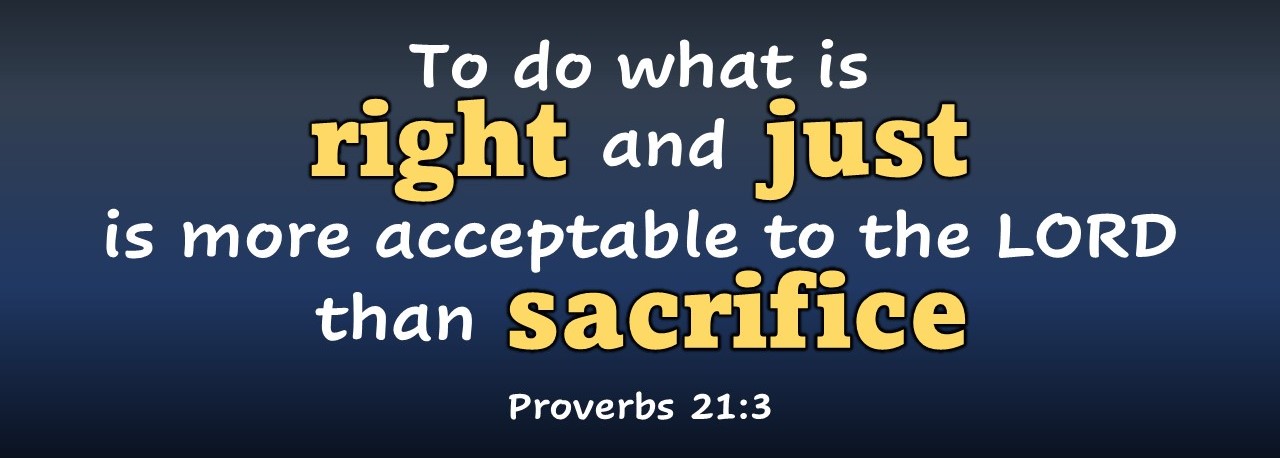
So here, in tandem with the passage from Micah 6 that we’ve been exploring, I want us to think of the Pharisees as representing an approach to religion and spirituality that by now should sound familiar. The verse from Proverbs above is one way of boiling down Micah’s criticism of the people of Judah. Whereas they seem quite willing to bring whatever ritual sacrifice God requires, no matter how extreme, what God really wants is a people of godly character.
We can see something similar in Jesus’ criticism of the Pharisees:
Woe to you, teachers of the law and Pharisees, you hypocrites! You give a tenth of your spices—mint, dill and cumin. But you have neglected the more important matters of the law—justice, mercy and faithfulness. You should have practiced the latter, without neglecting the former. (Matt 23:23, NIV)
If Micah had been there, he might have applauded. Being obedient to God’s law was much more about being people of justice and mercy than about keeping meticulous accounts of religious behavior.
I think here too of the calling God gave to his people at the foot of Mount Sinai, before giving them the Ten Commandments:
…you will be for me a kingdom of priests and a holy nation. (Exod 19:6)
It’s not as if God just wanted to have a group of religious people to hang out with. Generations earlier, God had promised to bless Abraham so that all the people of the earth would be blessed through him in turn (Gen 12:3). Here, at Sinai, the people are called to holiness to serve a priestly function, not merely for themselves, but for others. We can see this clearly in the way the apostle Peter picks up the same language:
But you are a chosen people, a royal priesthood, a holy nation, God’s special possession, that you may declare the praises of him who called you out of darkness into his wonderful light. Once you were not a people, but now you are the people of God; once you had not received mercy, but now you have received mercy. (1 Pet 2:9-10)
God, in mercy, called a people into being and continued to do so: first, through Abraham; again, in the exodus; and yet again, in Christ. God’s people know that this broken world is not their final home, and thus to some extent they live as strangers in a strange land. Yet as they pursue holiness, they do so with something of an evangelistic perspective. Having called believers a royal priesthood and a holy nation, therefore, Peter continues:
Dear friends, I urge you, as foreigners and exiles, to abstain from sinful desires, which wage war against your soul. Live such good lives among the pagans that, though they accuse you of doing wrong, they may see your good deeds and glorify God on the day he visits us. (vss. 11-12)
This means, of course, that believers are to love one another, but not only that; Peter also says that they are to give everyone proper respect, and even honor the emperor (vs. 17).
That’s right: the emperor. That’s not to say that Peter would condone the cult of emperor worship, nor that he would expect believers to have the same affection for Caesar that they would have for each other. But even the emperor is to be given his due. And let’s not forget: it was by the order of the emperor that Peter would later be executed.

THE COVENANT KINDNESS, love, and mercy we have received from God — the kindness, love, and mercy God’s people have always received — is what fuels our obedience to the two greatest commandments: to love God and to love our neighbors. We will gather in groups to worship, and in those groups, we will inevitably create both explicit and implicit standards of behavior by which we judge who gets it and who doesn’t, who’s truly religious and who isn’t. Are such standards biblically justified? Not always.
But if Micah were to have a say, our emphasis would be on the development of our character. It begins with an individual and communal commitment to remembering and actively contemplating the kindness and mercy of a just and holy God. That’s the first step in fulfilling our priestly vocation, our calling to be a people of justice, mercy, and humility ourselves.
 Squinting through Fog ("The Fog Blog")