

DURING THE FINAL week before his arrest and crucifixion, Jesus entered the city of Jerusalem. It was time for the yearly Passover festival, one of the three pilgrimage feasts required of observant Jews, and the city was already filling with thousands of Jewish pilgrims from all across the Roman Empire.
Jesus had been staying in the nearby town of Bethany, where he had recently raised his friend Lazarus from the dead. The miracle, not surprisingly, caused quite a stir; some people believed in Jesus because of it. The Jerusalem leadership, however, saw Jesus as a threat to their own power and authority, possibly even to the safety and stability of the Jewish nation under Rome. Thus, they began looking for ways to kill him.
But first, they wanted to publicly discredit or humiliate him.
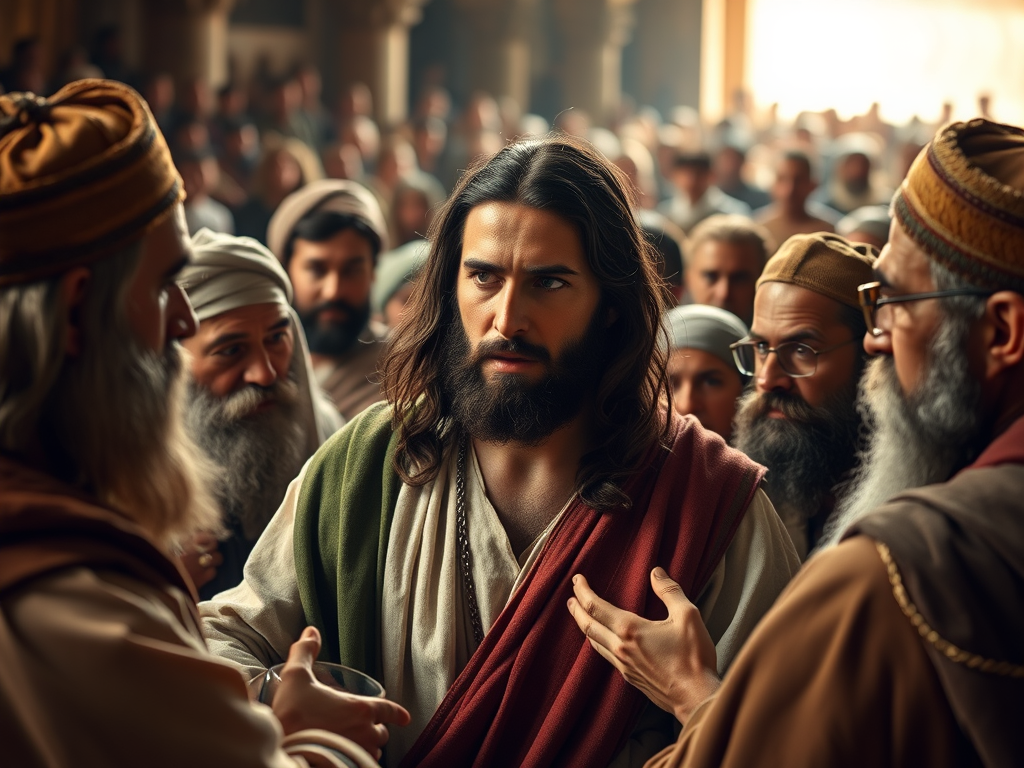
During that week, as Jesus taught the people in the temple courts, his opponents tried to get the better of him in public debate. The chief priests and elders questioned his authority. The Pharisees, the Herodians, and the Sadducees all tried to trap with trick questions. None of them succeeded. Indeed, quite the opposite happened: Jesus responded in ways that left them red-faced and speechless. “No one could say a word in reply,” Matthew tells us, “and from that day on no one dared to ask him any more questions” (Matt 22:46, NIV).
I imagine Matthew smirking a bit as he wrote that last part.
But that wasn’t the end of the debate. Having silenced his opponents, Jesus turned to the disciples and to the crowds, warning them not to imitate the scribes and Pharisees. Then he turned to face the scribes and Pharisees themselves, denouncing them in front of everyone a full seven times. The air was filled with tension as Jesus ended his diatribe with these words of deep lament:
Jerusalem, Jerusalem, you who kill the prophets and stone those sent to you, how often I have longed to gather your children together, as a hen gathers her chicks under her wings, and you were not willing. Look, your house is left to you desolate. For I tell you, you will not see me again until you say, “Blessed is he who comes in the name of the Lord.” (Matt 23:37-39)
Does that final saying sound familiar? It should: it’s verse 26 of Psalm 118. It’s also what the Passover pilgrims proclaimed as Jesus came down the road from Bethany into Jerusalem. And both of those facts, I think, are important to understanding what Jesus is saying to the scribes and Pharisees.
. . .
IN THIS POST, we come to the end of our exploration of the Egyptian Hallel, the group of psalms that was routinely used during the Passover festival. As non-Jewish modern readers, we may love the Psalms, but in the days of Jesus, these songs and poems played a more important role in Jewish life than they do in ours. For that matter, they were an important part of how Jesus himself thought, and he quoted the Psalms frequently. If we don’t recognize this, some of what Jesus says will sound odder, more cryptic than it probably did to his hearers — like the quote from Psalm 118 we explored in an earlier post, about being the cornerstone rejected by the builders.
As we’ve seen, it’s impossible to know the identity of the poet who wrote Psalm 118 with any certainty. But apparently, by the time of Jesus, the psalm was read as a prophecy about the coming Messiah, the anointed king that God would send to save his people. That was, after all, the question everyone was asking about this powerful and mysterious man named Jesus: was he the Messiah?
Think of the argument between Jesus and his opponents during the Hanukkah festival, not long before he raised Lazarus from the dead. “How long will you keep us in suspense?” his opponents barked. “If you are the Messiah, tell us plainly” (John 10:24). “I did tell you,” Jesus replied, “but you do not believe” (vs. 25).
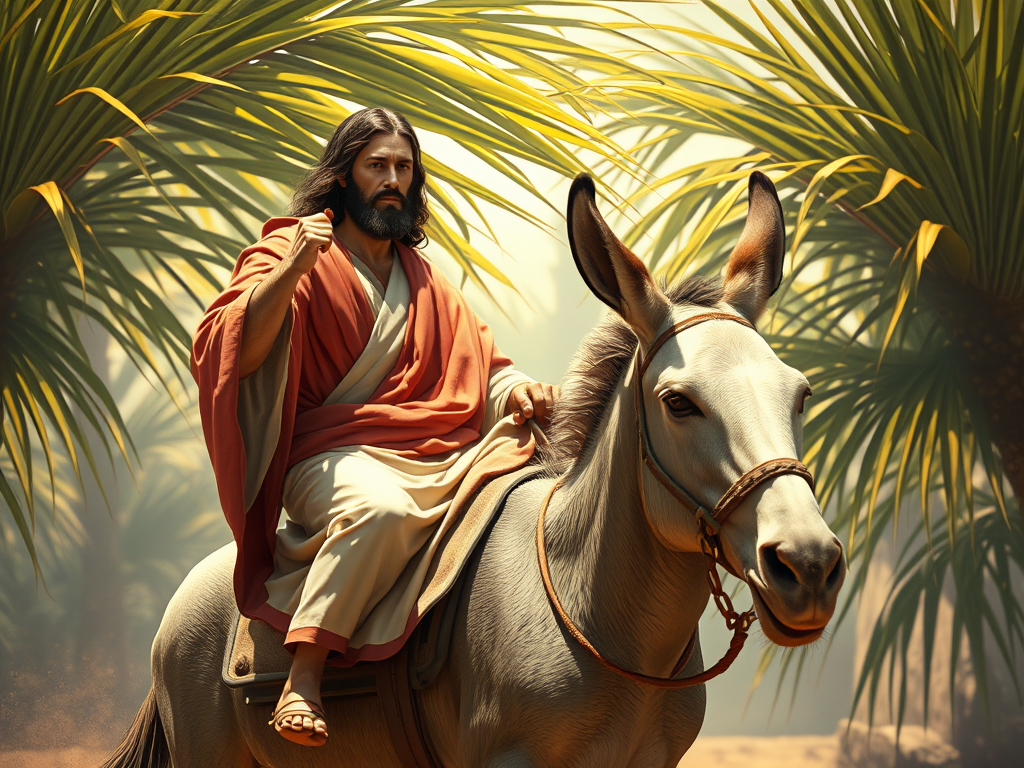
Later, as Passover approached, Jesus rode into Jerusalem on the back of a donkey, an act that itself was a messianic sign. Some of the people would have remembered the ancient prophecy of Zechariah:
Rejoice greatly, Daughter Zion!
Shout, Daughter Jerusalem!
See, your king comes to you,
righteous and victorious,
lowly and riding on a donkey,
on a colt, the foal of a donkey. (Zech 9:9; Matt 21:5)
In response, as Matthew tells us, the pilgrims along the road began acclaiming Jesus as the Messiah:
The crowds that went ahead of him and those that followed shouted, “Hosanna to the son of David! Blessed is he who comes in the name of the Lord! Hosanna in the highest heaven!” (Matt 21:9)
Imagine how the words must have resonated with the people. They were quoting Psalm 118, one of the psalms of the Hallel, the psalms they would use shortly during their Passover celebration, the psalms that looked backward to God’s past salvation and forward to the salvation to come. And here was the man Jesus, the one whose miraculous works proved to many that he was, in fact, from God. The prophecy of Zechariah and the words of Psalm 118 were being fulfilled right before their very eyes. At long last, the son of David was coming to the city of David.
Can you feel it? No wonder they were excited.
But why then did Jesus later say to the scribes and Pharisees, “You will not see me again until you say, ‘Blessed is he who comes in the name of the Lord'”? Isn’t that exactly what the pilgrims shouted on Palm Sunday?
Yes. But remember the context of those words from Psalm 118:
Blessed is he who comes in the name of the LORD.
From the house of the LORD we bless you. (vs. 26)
The blessing came from inside the temple courts, not outside the city. Jesus should have been welcomed by the Jerusalem leaders. Earlier, they even asked him point blank if he was the Messiah, but rejected his claim and tried to stone him for blasphemy. And when near the end of their public debate Jesus quoted to them the verses from Psalm 118 about the cornerstone, they knew exactly what he was saying. He was claiming once again to be the Messiah.
And once again, they would reject that claim.
Thus, Jesus’ lament over Jerusalem: no matter how many times God would send his prophets to speak truth to power in Jerusalem, the leaders wouldn’t listen. And in the parable Jesus tells just before claiming to be the cornerstone, the wicked tenants in the vineyard rejected the authority even of the landowner’s son.
What did they do? They killed him.
. . .
AGAIN, WE MAY love the Psalms for the way they so honestly portray the life of faith, a life not only of praise but of lament, not only of triumph but of desperation. And each psalm in itself is well worth whatever time we might spend in study and meditation.
But as readers of the New Testament, we might gain an even deeper appreciation for the Psalms by trying to imagine the thought world of those who later quoted them. And as a bonus, we would gain a deeper appreciation of the New Testament itself.
 Squinting through Fog ("The Fog Blog")