

Every year, thousands upon thousands of expectant parents have to make an important decision: what are we going to name our kid? And some of the names they come up with, frankly, are real head-scratchers. Did the parents not think about how their kids were going to get teased?

As tempting as it is, I won’t dis those parents here. Instead, I’ll only say that I’ve never liked my own name, Cameron. On the one hand, I’m grateful that my parents didn’t go with my mom’s first choice: Bruce. When I was born, pretty much no one in America knew who Bruce Lee was. But he made a splash on American television playing Kato in The Green Hornet. I was nine. I was transfixed.
But imagine being nine years old, a short Chinese kid in a mostly white school, and bearing the name Bruce Lee. I would have been beaten up every day. I thank God that my parents didn’t name me Bruce.
On the other hand, Cameron was a pretty rare name when I was born. Most people had never seen it before, nor could they seem to spell it or even remember it. Thus, I’ve been called every imaginable name beginning with a K sound and ending with an N: Carmen, of course, but also Kevin, Calvin, and Carlton.
And one co-worker, for some reason, insisted on calling me Henry. I never asked.
For a kid, all of this would have been more bearable if my name had some cool meaning to it, like “noble warrior.” But apparently, the name is of Scottish origin and means “crooked nose.” I’m not Scottish and my nose is fine, so whatever. I just hope it’s not a prophecy of things to come.
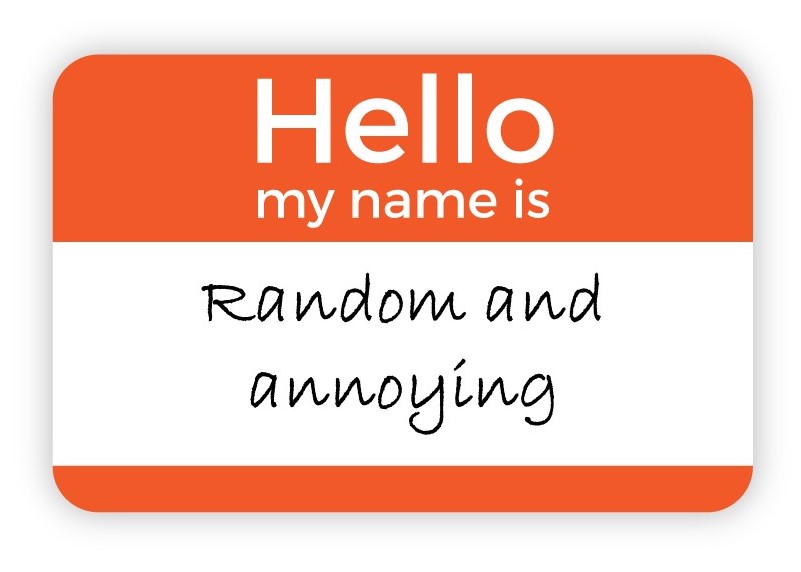
Names matter. No parent, I hope, would name their child “Tumor” (though someone, apparently, though “Melanomia” was a good idea). Then again, the prophet Isaiah named his son Maher-shalal-hash-baz, which means something like “quick-booty-speedy-plunder.” It’s tough being a PK (prophet’s kid).
As every middle schooler knows, no name is safe from a dedicated punster. If someone really wants to make a play on your name, they’ll find a way. And Micah, as we’ve seen, doesn’t do it for laughs. By punning on the names of cities in Hebrew, he turns the names into bad omens — literally, he makes them “ominous.” Here, then, is the second part of his prophecy against Judah:
You who live in Lachish,
harness fast horses to the chariot.
You are where the sin of Daughter Zion began,
for the transgressions of Israel were found in you.
Therefore you will give parting gifts
to Moresheth Gath.
The town of Akzib will prove deceptive
to the kings of Israel.
I will bring a conqueror against you
who live in Mareshah.
The nobles of Israel
will flee to Adullam. (Mic 1:13-15, NIV)
The name Lachish sounds like the Hebrew for “to the steeds.” Israel stands condemned for adopting the secular worldview of their neighbors: instead of trusting in God, they trusted in the might of their military. Moresheth, Micah’s hometown, sounds like the word for “betrothed”; the suggestion is that Moresheth will be given in marriage to another. Akzib sounds like “deceitful,” while Mareshah sounds like the word for “possessor” or “heir.” Just as Moresheth is promised to someone else, so will conquering invaders take “possession” of Mareshah. And Adullam, as we’ve seen, brings the prophecy back full circle to the sorry story of David and Saul.
Why did Micah pick these towns and cities in particular? It’s not as if invading armies would sweep in and destroy some towns and not others. Most likely, Micah chose those cities whose names lent themselves to his ominous wordplay. There’s more rhyme than reason — or perhaps we should say, the rhyme is the reason.
More importantly, all of the cities he names lay in a region known as the Shephelah, a fertile land of gentle hills to the east of the plains of Philistia and to the west of the mountains of Judah. Micah is naming the places of his childhood: his hometown of Moresheth and the towns nearby. These peaceful settlements were already threatened by the land-grabbing habits of the rich in Jerusalem, and they would eventually suffer the fallout of Jerusalem’s defeat.
As I suggested in an earlier post, the prophet is not an angry finger-pointer. He comes to Jerusalem in anguish, with a message that disaster is coming not just to the city, but to the rural areas of his youth. He mourns what is to come, and as we’ll see, directs others to mourn with him, for their fate is already sealed.
 Squinting through Fog ("The Fog Blog")