

IN MATTHEW 6, as we’ve seen, Jesus teaches his hearers not to worry about the basic necessities of life, like food and clothing. It’s not that these things aren’t important. Nor is Jesus chiding people for not being more “spiritual.” Rather, he wants them to be free of unnecessary and useless anxiety so they can put their energy toward pursuing God’s kingdom and righteousness wholeheartedly. They can trust that their heavenly Father already knows and cares about what they need, and be freed to live with a greater sense of security.
Then, in Matthew 7, Jesus reinforces the lesson by building up their confidence in a God who answers prayer. He’s already taught them to pray for their daily bread, which is both a prayer for their daily needs and a big-picture prayer at the same time. He follows this in chapter 7 by teaching that those who ask and seek will receive and find, and that the door will be opened to those who knock.
Again, we shouldn’t take this as a promise that God will give us anything we pray for. After all, haven’t you ever prayed for something you wanted God to do, but God gave you something better instead? Like a wise and caring parent, God knows what we need better than we do, and will often say no to what we want. Moreover, if we’re being honest, we know that we sometimes ask for things that we shouldn’t ask for. We might not know this until we have the clarity of hindsight, but the Father doesn’t suffer that limitation.
Jesus emphasizes again the trustworthiness of our heavenly Father:
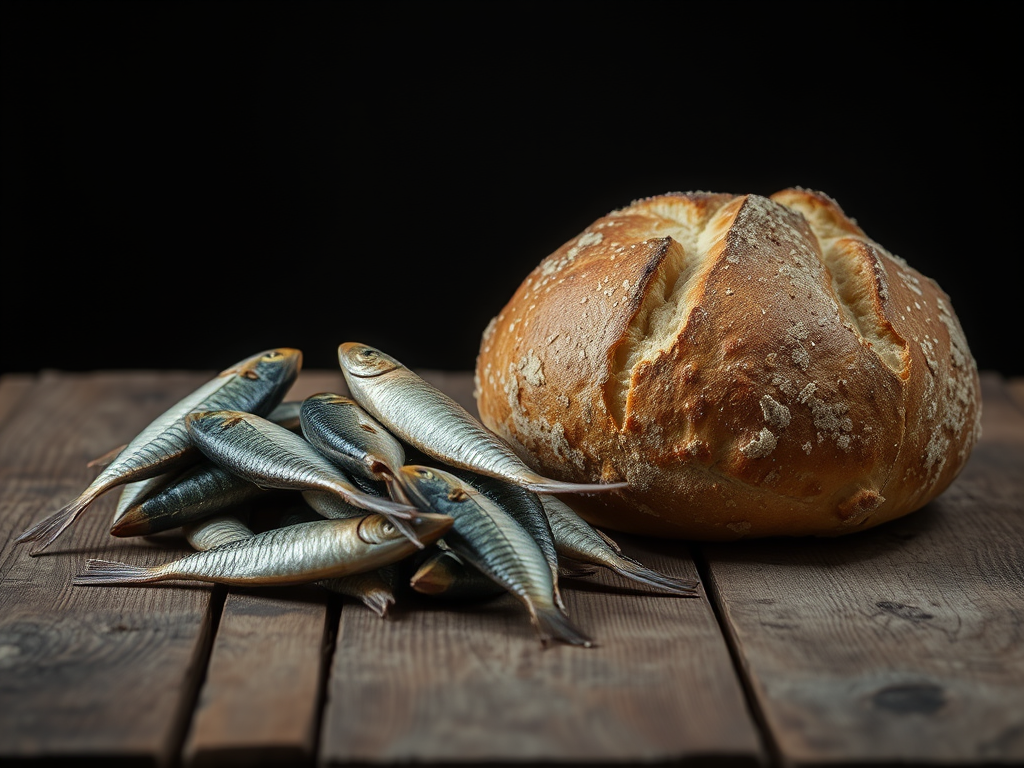
Which of you, if your son asks for bread, will give him a stone? Or if he asks for a fish, will give him a snake? If you, then, though you are evil, know how to give good gifts to your children, how much more will your Father in heaven give good gifts to those who ask him! (Matt 7:9-11, NIV)
This is what’s known as an a fortiori argument (remember your college English class?). A fortiori is Latin for “from the stronger.” This kind of argument starts with a proposition that no one would question, and uses this as support for a second proposition that in some way follows from the first.
If you’ve ever had your own children, you know full well how fallible we are as parents. I’ve taught parenting classes myself, so I’m painfully aware of how I repeatedly fell short of my own ideals. Thankfully, as one expert on child development said long ago, we don’t have to be perfect, we just have to be “good enough.” We may get it wrong from time to time; we may fail to give our children what they need in the moment. What matters, though, is that we get it right most of the time. If we’re reasonably consistent and dependable, kids learn to adjust and be confident in our imperfect parenting.
Jesus assumes that most parents are in some sense “good enough,” and uses an obvious example with which no one would disagree. If our kids ask for bread, we don’t give them a stone, which looks similar (think, for example, about how Satan tempted Jesus in the wilderness in Matthew 3). If they ask for a fish, we don’t hand them some other scaly and ritually unclean substitute. Well, of course, his hearers might say; no halfway decent parent would do such things!
Right, Jesus seems to say. Even sinful, fallible parents know how to do that much! So if that’s true, then what do you think about your Father in heaven? He’s neither sinful nor fallible. If you know how to give good things to your kids, to give them what they need, don’t you think that’s even more true of God?
The argument reminds me of a passage from the book of Hebrews. There, the writer is trying to encourage his readers to persevere in the face of hardship by seeing it as God’s discipline:
Endure hardship as discipline; God is treating you as his children. For what children are not disciplined by their father? If you are not disciplined—and everyone undergoes discipline—then you are not legitimate, not true sons and daughters at all. Moreover, we have all had human fathers who disciplined us and we respected them for it. How much more should we submit to the Father of spirits and live! They disciplined us for a little while as they thought best; but God disciplines us for our good, in order that we may share in his holiness. (Heb 12:7-10)
Those who read these words would have remembered their own childhood, in which the presence of parental discipline was taken for granted. But “how much more,” the author says, we should apply this to our understanding of God the Father. Our imperfect earthly parents did their best, but our perfect and holy heavenly Father really does do what is best for us.

IT WILL BE another seven chapters yet in the gospel of Matthew before we come to the story of Jesus feeding the 5,000. The menu was basic — just bread and fish — because Jesus began with and then multiplied a humble meal that a boy brought to him. No appetizer or dessert, no wine, no frills. Just what was needed to satisfy the legitimate hunger of the crowd.
All the more reason, I think, not to run away with the idea that God gives “good gifts” to his children, imagining all the things we’d want to find under the Christmas tree. Bread and fish are homely, basic needs, not mere wants or luxuries. Our heavenly Father is a good father, indeed, the very best kind of father, more trustworthy than any earthly parent. He knows and cares about what we need.
So ask, Jesus tells his hearers. Seek. Knock. Know that your Father sees and cares, and that you don’t have to be anxious about your needs. Then seek his kingdom and righteousness. And oh, by the way…I’ve got an easy way to remember what it means to seek and embody God’s kingdom. Listen up, because I’m going to tell you that next.
 Squinting through Fog ("The Fog Blog")