

WHEN JESUS TAUGHT his followers to pray, he taught them to address God as their Father and to pray earnestly that his will would be done on earth as it is in heaven (Matt 6:9-10). This is the opening of what we know as The Lord’s Prayer, memorized and recited by believers around the globe and throughout the history of the church.
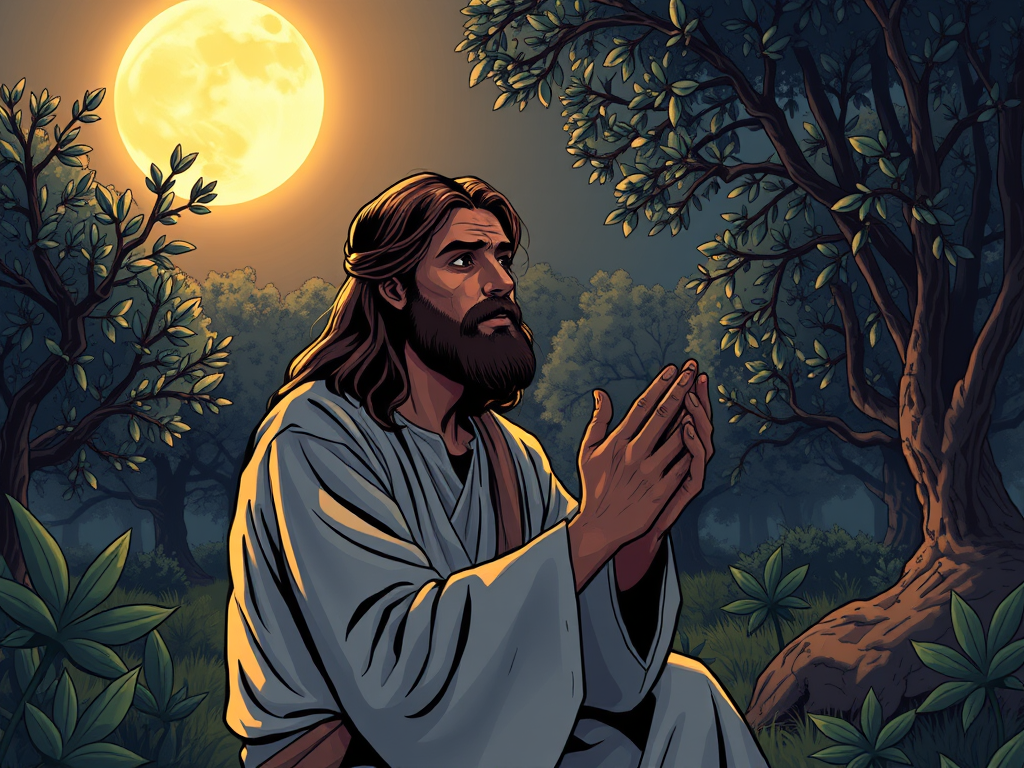
Jesus did not mean, of course, that every prayer must use these and only these words. That would negate every other prayer in Scripture, including his own. The Lord’s Prayer isn’t a script; it’s not about the mechanics of prayer but its posture. And clearly, Jesus practiced what he preached; he prayed to God as his beloved Father and always sought to do his will, even when it meant subjecting his own will to the Father’s as he prayed in Gethsemane: “My Father, if it is possible, may this cup be taken from me. Yet not as I will, but as you will” (Matt 26:39, NIV).
Moreover, in retrospect, we can see how even the prayer of the apostle Paul for the Colossians echoes the Lord’s Prayer. Paul prays that, through the Holy Spirit, they would come to know the will of God and live accordingly, so that every aspect of their lives would show the fruit of the gospel.
Before we move on to look at the stunning way in which Paul describes the supremacy of Christ over everything, I want to linger for a moment on the matter of God’s will. Paul’s prayer gives us an opportunity to reflect on the relationship between the present and the future, and thereby on the nature of Christian hope. Let me give you the complicated sounding theological term for this — bear with me! — and then I’ll explain it and its significance. Ready? The term is inaugurated eschatology, or what is often thought of more simply as the “already and not yet” nature of the gospel story and its promises. Here’s the quick explanation.
First, the word “eschatology.” That’s the name for the domain of theology that studies what the Bible teaches about the final chapter of human history, or what people often call “the end times.” The word comes from the Greek eschaton, which means “last” or “end.” Too often, the discussion of eschatology gets lost in predictions of when Jesus will return and what will happen before and after he comes — and don’t worry, I have no intention of slogging through all of that here.
Rather, to me, the significance of eschatology, particularly as we see it play out in the New Testament, is in noticing how the biblical authors consistently see and interpret the present in light of the future. They see beyond the circumstances of the moment to what God is doing in and through them, as history continues to move toward the future God has promised. If you like, think back to what your English teacher told you about foreshadowing — how something in a play or novel hints at how the work will end. Thinking “eschatologically” is like that. We know how the story will end; we know what God will ultimately do. And because of this, we see that end foreshadowed now. We see what God is doing, and it strengthens our confidence in what God will do. That’s the “eschatology” part; hold onto that thought for a moment.
What’s “inaugurated”? Think back to the preaching of Jesus; what was his major theme? The kingdom of God, or in Matthew, the kingdom of “heaven.” The idea here is that the kingdom Jesus preached isn’t just about some faraway future. Rather, the kingdom has already been inaugurated in the life and ministry of Jesus himself. It’s here already, but not in its fullness, not yet. That’s the “already but not yet” of inaugurated eschatology.
The kingdom is here, but it’s not finished. Thus, when we pray that God’s will would be done on earth as it is in heaven, we know full well that it isn’t, not completely. God’s will won’t be done perfectly on earth until after Jesus returns as king. But that doesn’t stop us from praying for God’s will to be done now — and in fact, praying those words should spur us to ask how our own will may be out of alignment with God’s.
So why am I bringing all that up here, as we study Colossians? Think back to what Paul prays for them. He prays for them to know God’s will and to live in a way that befits the gospel, bearing fruit, and growing even further in their knowledge of God. He prays for their strength, endurance, and patience; he prays for their joy and gratitude.
And then he reminds them of the reasons they have for being thankful. They’ve been adopted into God’s family and now have a share in the inheritance of God’s people; they have been brought into the story that stretches back to God’s promise to Abraham. They have been rescued from the dominion of darkness and brought into the kingdom of light instead, into the kingdom of the Son. They have been redeemed; they have been forgiven.
All of this describes what God has already done. And all of it points forward to what God will yet do. Their inheritance is assured, but they don’t have their full inheritance yet. They have been rescued from darkness but the day has not yet come when darkness will be vanquished. They’ve already been forgiven but still sin, and the day of full forgiveness and the end of sin haven’t come yet.
And what difference can or should this make to us? It’s a matter of perspective. We are not who we were, and we are not who we will yet be. When we look at our faults and weaknesses, or those of others, how do we take this? Do we see how far we are from perfection and feel defeated and worthless? Or do we see how far we’ve come and feel encouraged? And if we feel encouraged, is it because we’re patting ourselves on the back for being such a hard worker, or because we see the hand of God in our lives?
Again, if we pray openly and honestly for God’s will to be done, it should remind us that we ourselves may have a long way to go in that area. But even that moment of humility, that desire to live in a way that’s more attuned to God’s will, is itself the work of the Holy Spirit in us. God has begun a work in us, and as Paul tells the Philippians, “he who began a good work in you will carry it on to completion until the day of Christ Jesus” (Phil 1:6), the day Jesus returns.
It may take a while, but God will finish what he started. And if we care to look for it, we will begin to see all the ways that God is at work now, foreshadowing the glory with which the story will end.
Thy will be done, Lord; thy will be done.
 Squinting through Fog ("The Fog Blog")