

OVER THE YEARS, across a variety of venues, I’ve used a lot of different microphones. But I’ve never dropped one — at least, not on purpose. And I probably never will. I’m not flamboyant enough, nor am I ever likely to think that I’ve so thoroughly nailed a talk that a mic drop would be the appropriate exclamation point.

That’s not to say, though, that I don’t pay attention to endings. When you have something important to say, endings matter. You’ve done all you can to make your point. You’ve told the most engaging stories, marshaled your best arguments, struck the right tone, and chosen the most effective images and metaphors. Great. But you can undermine all that work with a flat or distracting ending.
Think about it. You may know people who just can’t tell a joke because they keep botching the punchline. You’ve read page-turners that flubbed the last chapter and made you feel like throwing the book across the room. You’ve seen movies whose endings made you want your money back. And you’ve read letters that never seemed to come to the point.
Is that what we would expect of the apostle John? Some readers, coming to the final verse of 1 John, have scratched their heads in confusion, asking themselves, Where did that come from? And sure, it’s theoretically possible that John had one last thought to add that he forgot to include in the letter, so he stuck it in an awkward P.S. at the end. Possible, yes, but unlikely. Nor is there any evidence that I know of for supposing that a page went missing somewhere.
Rather, if we assume that John’s last sentence was fully intentional, designed to strike just the right note and leave just the right words ringing in his readers’ ears, then we might read his last sentence as a pastoral mic drop.

HERE’S THE SENTENCE, a mere six words in the Greek:
Dear children, keep yourselves from idols. (1 John 5:21, NIV)
This is the seventh and final time John refers to his readers as “little children.” As an elderly man, he writes with fatherly affection for the community that looks up to him as its pastor. To begin his final sentence in this way not only encapsulates the tone of the entire letter, it calls his readers to attention, signaling that he’s about to say something important.
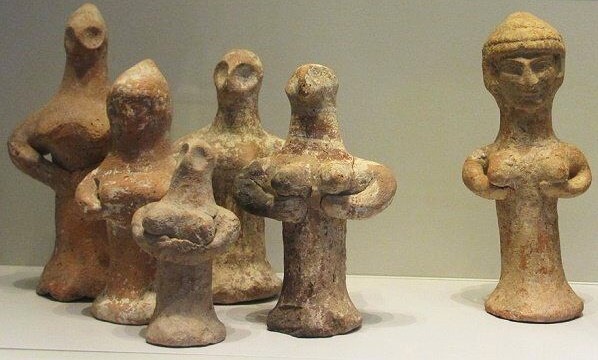
And what does he say? “Keep yourselves from idols.” The verb suggests vigilance, like a military guard keeping constant watch for enemy threats. But what “idols” did John have in mind?
When we read of idols in the Bible, we might think of the “graven images” — objects of worship made of wood or stone — forbidden in the second of the Ten Commandments. But that commandment is an expression of the first: “You shall have no other gods before me” (Exod 20:3; Deut 5:7). The covenant relationship between God and his people was to be an exclusive one: they would be his people, and he would be their God (Jer 32:38; Heb 8:10).
But as the Old Testament narrative amply demonstrates, idolatry was a problem for the people throughout their history, leading to their eventual exile from the Promised Land. Later, in the days of Jesus and Paul, idol worship still abounded in the Roman Empire, causing problems for the church. Was some kind of pagan idol worship, therefore, plaguing John’s readers?
Possibly, but if so, one wonders why John doesn’t address it elsewhere in the letter. A better reading, perhaps, comes from interpreting the verse in light of what he’s already said. Again, let’s go back to that first commandment given to Moses on Mount Sinai: “You shall have no other gods before me.” And the last thing John says before the final verse is “He is the true God and eternal life.”
The implication, it seems, is that the secessionists were essentially committing the sin of idolatry. John isn’t saying, And by the way kids, I’ve noticed some of you beginning to toy with little pagan objects of worship. Don’t mess with that stuff; it’s dangerous. Rather, he’s telling his readers to be watchful, to not make the same worldly mistakes the secessionists made.
That doesn’t necessarily mean that the people who had separated themselves from the community had been bowing down to little stone statues that perched on their living room mantels. All that’s required for the sin of idolatry is to worship something other than God, whatever form that worship might take. The practice of the time might be to make graven images of such false gods. But each culture in each era will practice idolatry in its own way.
Including ours.
Let me ask the question this way: if you’re being completely honest, whom or what are you tempted to idolize? It’s no accident that one of the longest running reality-TV shows — as of this writing, now in its 22nd season — is called American Idol. It’s more than a singing competition; it’s about striving after fame, fortune, a fat recording contract, and the adoration of fans.
But it’s not just Americans. Japan, for example, has been cranking out teenage idols for decades. Talent agencies scout for young boys and girls with faces and personalities they believe they can market — no experience necessary! — and engineer them into the kind of pop-culture icons that are sure to generate a devoted fan base and lots and lots of revenue. In Japanese, these manufactured celebrities are called aidoru — a word derived from the English word “idol.”
JOHN OFTEN SPEAKS of the world as a place of darkness. Here in the final verses of his letter, he warns his readers that the world is under the devil’s control. Jesus keeps them safe from harm, but that doesn’t mean they can’t be tempted. The secessionists cared more about what the world thought of them than what God thought of them. They turned their backs on the truth about Jesus, and in so doing turned their backs on God. Whatever they worshiped, it wasn’t the one True God.
And some of their worldly ideas and teaching, it seems, were still circulating in the community, still influencing minds and hearts. That’s why I read John’s final sentence as something of a mic drop, the punchline that puts the final exclamation point on his letter: Dear children, keep yourself from idols.
So again, let’s ask ourselves honestly: whom or what are we tempted to idolize? Who or what gets our devotion and worship, devotion that belongs only to God? We live in a world in which people constantly compete for our attention and play on our desires, all for profit. Are we even aware of how much the world has influenced our values and priorities?
John seemed to think this was important. Perhaps we should too.
 Squinting through Fog ("The Fog Blog")