
You can read the original post on what I mean by “echo-location” here
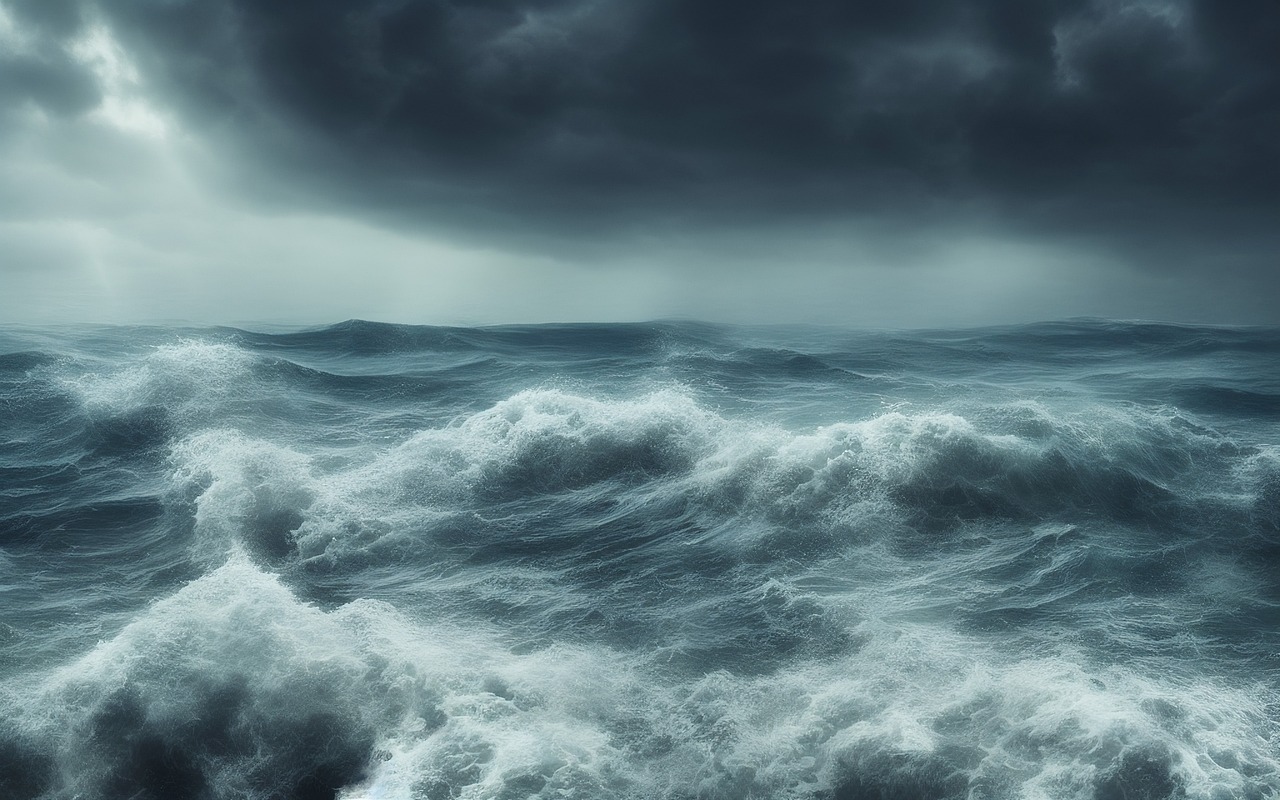
Jesus and his disciples are out on a boat in the middle of the Sea of Galilee. Winds sweep violently over the surrounding hills, whipping the water into tall waves that swamp the boat and make it pitch madly. The disciples fear for their lives — even the fishermen among them are terrified.
And through all of the chaos, Jesus is taking a nap in the back of the boat.
It would be a comic scene were it not for the sheer terror of the disciples. Here’s how Mark describes it:
A great windstorm arose, and the waves beat into the boat, so that the boat was already being swamped. But he was in the stern, asleep on the cushion, and they woke him up and said to him, “Teacher, do you not care that we are perishing?” And waking up, he rebuked the wind and said to the sea, “Be silent! Be still!” Then the wind ceased, and there was a dead calm. He said to them, “Why are you afraid? Have you still no faith?” And they were filled with great fear and said to one another, “Who then is this, that even the wind and the sea obey him?” (Mark 4:37-41, NRSVUE)
Only Mark tells us that Jesus was asleep on a cushion — a nice little detail that contrasts with the violence of the storm. Who knows how long the disciples endured the storm before they decided to wake Jesus? But they knew that he could save them. They cried out, “Teacher, do you not care that we are perishing?”
The words sound so calm, as if they were proposing a philosophical chat over a cup of tea. In Matthew’s account, however, the cry is more terse, more urgent. It’s a mere three words in the Greek; translated literally, it would be, “Lord…save…we perish!” (Matt 8:25). I envision them trying to get out a coherent sentence but unable to do so as the seawater splashes in their faces and they gasp for air.
Jesus wakes up and rebukes the wind and waves; a sudden eerie calm descends. He chides the disciples for their lack of faith. And then, or so I like to imagine, he goes back to sleep.
If the disciples were afraid before, Mark suggests, they’re even more afraid now. You’d think they’d be high-fiving each other for being rescued from drowning. But they realize that the man snoozing in the stern is more powerful than the very elements of nature they thought would kill them. After a stunned silence, they whisper to one another, “Who is this guy?”
But it’s not as if they don’t know. They’re not trying to solve a riddle; they’re grappling with the implications of what they’ve just seen. In ancient Near Eastern cultures, the sea was symbolic of chaos, to be conquered by the most powerful of gods. The Old Testament picks up this imagery, portraying God as the one who rules the sea. In Psalm 89:9-10, for example, we read:

You rule the raging of the sea;
when its waves rise, you still them.
You crushed Rahab like a carcass;
you scattered your enemies with your mighty arm.
“Rahab” here refers to a mythical sea monster, again, a symbol of chaos. The warrior God not only slays the beast but scatters his enemies. A similar idea is given in Psalm 65:7:
You silence the roaring of the seas,
the roaring of their waves,
the tumult of the peoples.
In Psalm 89, God “stills” the raging of the sea; in Psalm 65, God “silences” its roaring. In the Hebrew, it’s the same word, which at root means to speak loudly to someone. The word is used only 11 times in the Old Testament; seven of these are in the Psalms. All five of the other uses are for the people’s loud and enthusiastic praise of God. But in these two psalms, it pictures God loudly commanding the water to be still.
Does that remind you of someone?
The Old Testament teaches that the wise understand the might and majesty of God, and fear him. That understanding includes the recognition of God’s sovereign power over the elements, over creation. I would guess that the disciples knew this. They weren’t scratching their heads trying to figure out how a man can do such miracles.
They were wrestling with what it meant to be in a boat with God.
Perhaps we might do well to wonder the same.
 Squinting through Fog ("The Fog Blog")