

I SUSPECT THAT many of you reading this are fans of C. S. Lewis’ Chronicles of Narnia. I was still in elementary school when I devoured the first three of the seven books. I would have read them all, but these were the only ones our school library had. It wouldn’t be until college that I read all seven in one week, one book each evening.
The first three books tell of the adventures of the four Pevensie siblings — Peter, Susan, Edmund, and Lucy — in the land of Narnia. In the first novel, The Lion, the Witch, and the Wardrobe, the evil White Witch takes advantage of Edmund’s foolish and self-centered nature and manipulates him into being a traitor. By the ancient laws of the Deep Magic of Narnia, she has the right to execute him for his treachery.
As the story approaches its climax (spoiler alert!), the great lion Aslan — the memorably magnificent Jesus figure in Lewis’ story — offers himself to the White Witch to be executed in Edmund’s place. The Witch, of course, gleefully takes the deal; it’s what she wanted in the first place. Aslan now lies on the Stone Table on which he is to be sacrificed, surrounded by the Witch’s minions, humiliatingly shorn of his glorious golden mane. Bending over the passive, seemingly helpless lion, the witch gloats, “And now, who has won? Fool, did you think that by all this you would save the human traitor? Now I will kill you instead of him as our pact was and so the Deep Magic will be appeased. But when you are dead what will prevent me from killing him as well? … Understand that you have given me Narnia forever, you have lost your own life and you have not saved his. In that knowledge, despair and die.”
But Aslan, the one who before the dawn of time had sung Narnia into existence, knew something that neither the arrogant White Witch nor the terrified Pevensie children knew. Yes, the Deep Magic had to be appeased; there had to be justice. Beneath the Deep Magic, however, lay a more ancient and Deeper Magic: if a willing and completely innocent victim were to be killed in a traitor’s place, the Table itself would split and death would be reversed. So the resurrected Aslan explained to Susan and Lucy before the final battle that defeated the White Witch and her army for good.
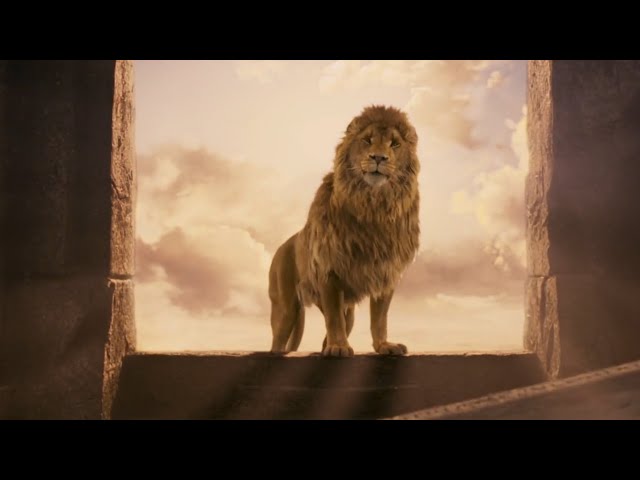
These are the scenes that come to my mind when I read what Paul says in Colossians 2. Using one metaphor for what God did through the cross of Christ, he teaches the Colossians that they’ve already been spiritually circumcised. Using another, he teaches that the charge against them has been taken away, because God nailed it to the cross. And as he continues, he uses yet another metaphor to describe the triumph of the cross:
And having disarmed the powers and authorities, he made a public spectacle of them, triumphing over them by the cross. (Col 2:15, NIV)
“Powers and authorities”: this is language he’s used before. Just a few verses earlier, in Colossians 2:10, Paul declared Christ to be “the head over every power and authority.” And in verse 16 of chapter 1, he declared that all powers and authorities were created “through him and for him.” This time, however, he portrays the powers and authorities as things that needed to be conquered. What does he mean by them?
The background imagery seems straightforward enough, and something the Colossians would easily have understood. Conquering Roman generals would make a spectacle of the people they defeated by staging a victory parade in which prisoners would be forced to march in a sorry procession behind them.
There is still the question, however, of what Paul means by the “powers and authorities” whom God has defeated. If we follow the imagery in Lewis’ Narnia, we might think of them as Satan and his minions. Some indeed have read it this way.
But bible scholar N. T. Wright suggests a different reading that has two sides. On one side, as former pagans, the Colossians had been beholden to gods who were not truly God. And on the other side, from a Jewish mystical perspective, the angels had used the Mosaic Law to keep the Gentiles out of the family of God. But the cross has made all of that irrelevant. The one true God has taken away whatever hold these powers and authorities once had over the Colossians.
Wright also suggests a more concrete reading, however, one that fits nicely with our exploration of the charge against Jesus in the previous post. The worldly powers and authorities at play in the drama of the crucifixion were Rome and the Jewish leaders, and together, as Wright says, they “conspired to place Jesus on the cross.”
Personally, I’d want to dial back that language of co-conspiracy. One couldn’t call Rome and Israel anything like a “team” with a shared purpose. Reading the story, you can feel the political tension in the exchange between Pilate and the chief priests, with each trying to best the other. Still, yes, in a purely pragmatic sense, they ended up working together to crucify Jesus, and I imagine each taking some satisfaction in what they were able to achieve with what power they had.
But the Deeper Magic is that they unknowingly played right into God’s hands. Instead of the White Witch and her minions dancing gleefully around the Stone Table, instead of Satan and his demons, picture Pilate and the Roman authorities; picture the chief priests, the Pharisees, the Sanhedrin. Picture all of them patting themselves on the back for their cleverness. Then listen to what Paul wrote to the Corinthians:
None of the rulers of this age understood it, for if they had, they would not have crucified the Lord of glory. (1 Cor 2:8)
Human wisdom, Paul tells the Corinthians, is nothing in the face of divine wisdom; human power is nothing in the face of God’s power. That was true then, and it’s true now. Through the ironic triumph of the cross, Jesus established his authority over all. And as we’ll see, that includes his authority over all the legalistic rules of human religion, even those we might be tempted to submit ourselves to today.
 Squinting through Fog ("The Fog Blog")