

WHAT DO YOU want from a sermon? Inspiration and encouragement? Some other emotional impact, as when a preacher makes you laugh or cry, or even feel a bit guilty? Do you want practical suggestions as to what you’re supposed to do with the message? Do you want diligent exposition of the original languages, a connection to larger theological constructs, maybe even a bit of historical background?
Preachers differ in style and content. And people differ in what they hope to hear. One person gets impatient if the sermon seems too heady and academic; another gets annoyed if the preacher tells too many personal stories. But one thing I suspect we all share in common is that we don’t want to walk away from a sermon confused or uncertain about what the preacher was trying to say. We want them to be clear and understandable, or else what’s the point?
Jesus, however, didn’t try to make everyone understand him. He often spoke in parables that came across as riddles to many of his hearers — sometimes even his own disciples. On one level, such stories and images were meant to get under people’s skin, to continue to work on their imagination from the inside out. But at another and more fundamental level, it took faith in the first place to understand what Jesus was saying.
He once told a parable about the gospel using the metaphor of a farmer sowing seed. Here it is as translated in the Common English Bible:
A farmer went out to scatter seed. As he was scattering seed, some fell on the path, and birds came and ate it. Other seed fell on rocky ground where the soil was shallow. They sprouted immediately because the soil wasn’t deep. But when the sun came up, it scorched the plants, and they dried up because they had no roots. Other seed fell among thorny plants. The thorny plants grew and choked them. Other seed fell on good soil and bore fruit, in one case a yield of one hundred to one, in another case a yield of sixty to one, and in another case a yield of thirty to one. Everyone who has ears should pay attention. (Matt 13:3-9)
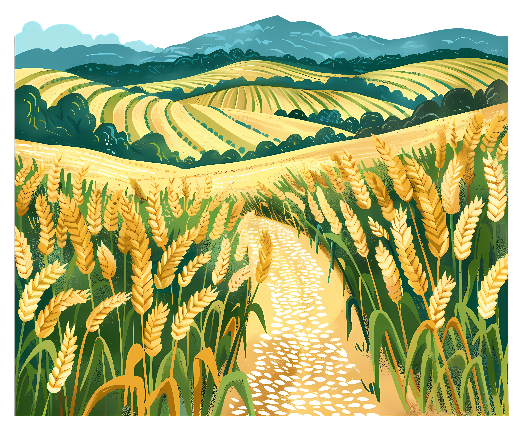
The parable describes the different responses to Jesus’ preaching of what he calls “the secrets of the kingdom” (Matt 13:11). The different places where the seed landed could be understood as different conditions in the hearts of his hearers. Some might reject the word; others might receive it joyfully, but later turn away when trouble comes or the truth is choked out by the lies of the world.
Only the seeds that fell on the good soil — where there was faith and commitment — “bore fruit,” Jesus said. You may be used to the New International Version, which says that the seeds “produced a crop”; the New Revised Standard goes even further, saying that the seeds “brought forth grain.” Such translations are in keeping with Jesus’ imagery; the farmer, after all, was probably sowing a grain crop, not planting fruit trees.
In this case, however, the Common English Bible may give the more literal translation. The word Matthew uses is a noun that’s typically translated as “fruit” — suggesting something that can be plucked from a tree or vine. That’s not to say that the translation “crop” or “grain” is wrong; both clearly convey the sense of what Jesus was saying. But the benefit of using the word “fruit” instead is that it helps us to see the connection to other teaching about fruitfulness in the New Testament.

THE COLOSSIANS HAD heard the gospel from Epaphras. Those who responded in faith didn’t just believe in some strictly intellectual sense, as if the truth about Jesus was merely an interesting fact to be trotted out in casual conversation. Rather, the message found good soil in Colossae, as Paul suggests:
This message has been bearing fruit and growing among you since the day you heard and truly understood God’s grace, in the same way that it is bearing fruit and growing in the whole world. (Col 1:6)
The gospel message has been “bearing fruit” Paul says; the word is a verb closely related to the noun Matthew uses to translate Jesus’ parable. Indeed, Matthew uses the same verb as Paul later in the passage, when Jesus was explaining the parable to the Twelve:
As for what was planted on good soil, this refers to those who hear and understand, and bear fruit and produce—in one case a yield of one hundred to one, in another case a yield of sixty to one, and in another case a yield of thirty to one. (Matt 13:23)
The gospel is “bearing fruit and growing,” Paul says, “in the whole world.” He doesn’t mean that literally, of course; at best he’s referring to the Roman Empire. But his point is that the message is finding good soil and taking root wherever it goes, all throughout the empire.
Even more importantly, the gospel is bearing fruit not just in the city of Colossae, but in the hearts and lives of the Colossians, especially as demonstrated in their love. This is reminiscent of Jesus’ final words to his disciples in the Upper Room, when he commanded them to stay connected to him as the branches of a grapevine draw life from the trunk. Only in that way, he taught, could they bear fruit. And that fruit was to be demonstrated in their love for one another (John 15:1-17).
Of course, we can also think here of Paul’s teaching about the fruit of the Spirit: “love, joy, peace, patience, kindness, goodness, faithfulness, gentleness, and self-control” (Gal 5:22-23). These are not meant to be separate qualities, as if we could take each one on separately as a self-improvement project: “This year I’m going to work on patience, and next year, we’ll see about self-control.” Rather, the word “fruit” here is singular; all the character qualities Paul lists are expressions of the work of the one Holy Spirit in a person’s life.
And at the head of the list is love.
AS A PASTOR, Paul has many things to teach the churches. But when we read his letters, we shouldn’t try to make distinctions between “good” congregations and “bad” ones. Each congregation had its own struggles and temptations. The Colossians in particular were being tempted to follow philosophies that, like the thorns in Jesus’ parable, might choke the life out of gospel fruit that was growing in and among the Colossians. But even so, he recognizes in them the fruit of faith, hope, and love.
Perhaps we could take a page from his pastoral playbook. Instead of moaning over how to fix what’s wrong with a broken congregation, we should begin by celebrating what’s right and looking for a way to encourage its growth.
 Squinting through Fog ("The Fog Blog")