

HUMAN BEINGS ARE social beings. It’s in our nature, intrinsic to the way we were created to be. As infants, we would not survive without the care of others, whose job it is not only to feed and shelter us, but to teach us how to get along in the world. It’s normal and natural, therefore, to care what others think — that’s how we learn to get along and adapt to new environments.

But of course, it’s also possible to care too much about what others think of us, to live under a constant cloud of shame and uncertainty, to become social chameleons who have a deep-seated need to please others. Psychologically, this can happen if we don’t grow up in an environment in which we are secure in the knowledge, deep down, that we are loved and accepted for who we are. That doesn’t mean, of course, that we’re allowed to do as we please — but it does mean knowing that we can count on the love and loyalty of our parents or other adults who care for us even when we misbehave.
Something similar could be said in the spiritual realm. Are God’s people secure in the care and protection of their heavenly Father? Or do they care too much about what others think and say about them, even those who worship other gods?
This was a constant struggle for the Israelites, especially after taking possession of the Promised Land. They knew that their God — the God of Abraham, Isaac, and Jacob, the God of Moses and the Exodus — was the one and only true God. They knew that the first two of the Ten Commandments was to have no other God but God and to not make or worship idols. But in the ups and downs of relating to neighboring nations, they fell into idolatry again and again.
It’s impossible to know when Psalm 115 was written, but it seems to be a liturgical reminder to the worshiping community that there is one and only one God — the one who has protected and blessed them, the only one to whose name all glory is to be given.
Verse 2 of the psalm, you’ll recall, laments that other nations are asking each other, “Where is their God?” It’s a rhetorical question that presumes its own dismissive answer: nowhere. But on behalf of the community, the psalmist gives a different answer to the question:
Our God is in heaven;
he does whatever pleases him. (Ps 115:3, NIV)
The one true God dwells in heaven, beyond the clouds, beyond the stars. And he does whatever he pleases. That’s not a way of saying that God acts capriciously on a whim; it’s a way of saying that God’s will is sovereign. And that, not surprisingly, leads to a disavowal of the so-called gods of other nations:
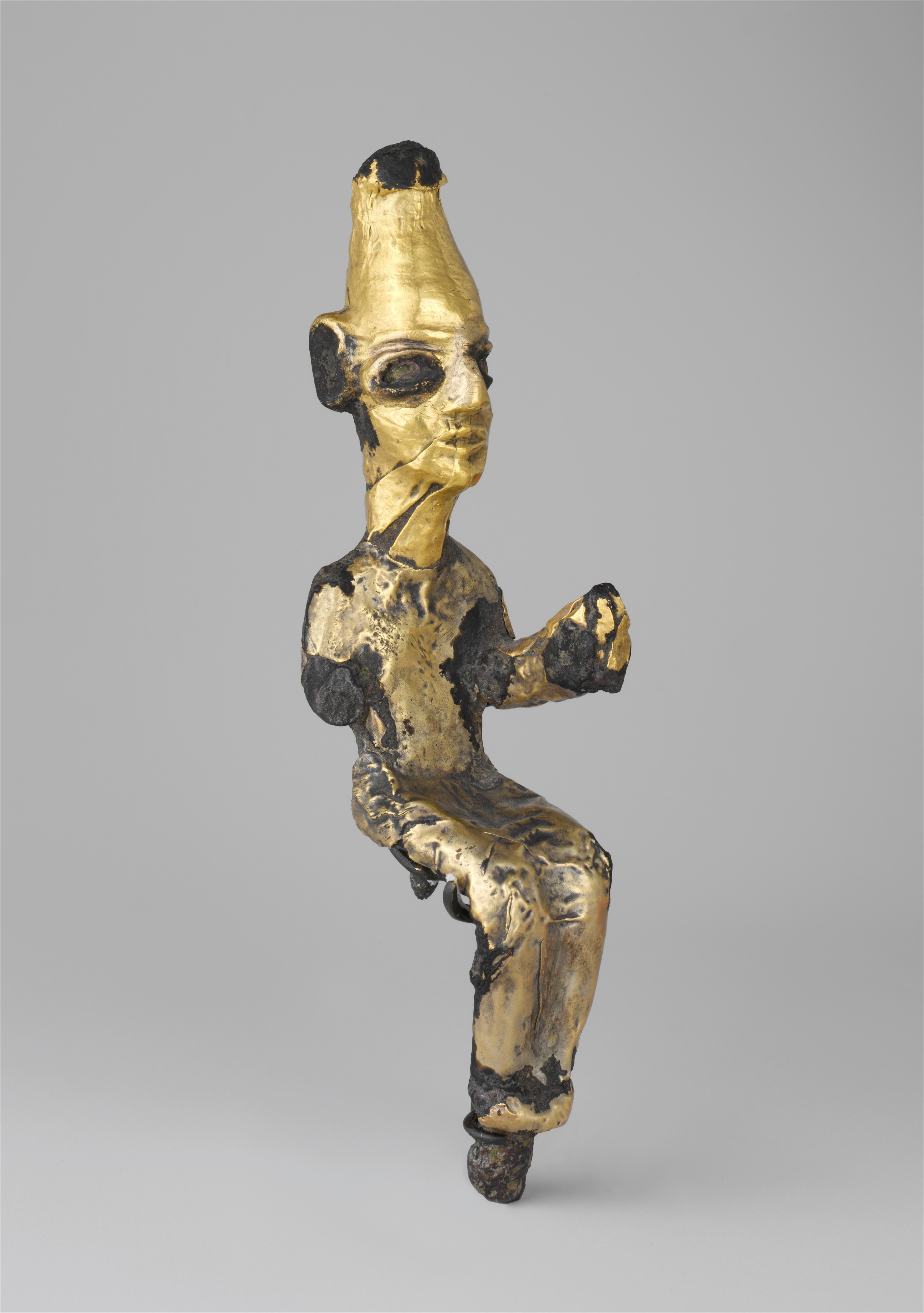
But their idols are silver and gold,
made by human hands. (vs. 4)
The other nations, of course, would protest that their handmade totems were symbols or representations of the gods themselves. The Canaanites, for example, worshiped a whole pantheon of deities and had a complex mythology. But none of that matters to the psalmist, who insists that these idols are human creations and nothing more. For three verses, the psalmist spells out in detail their absolute impotence:
They have mouths, but cannot speak,
eyes, but cannot see.
They have ears, but cannot hear,
noses, but cannot smell.
They have hands, but cannot feel,
feet, but cannot walk,
nor can they utter a sound with their throats. (vss. 5-7)
These idols are mere lumps of metal, incapable of sight and hearing, unable to smell or feel. They cannot move, and perhaps most importantly, cannot speak or make a sound. There can be no real relationship with them, and it is foolish to worship them. But the folly runs even more deeply:
Those who make them will be like them,
and so will all who trust in them. (vs. 8)
It’s hard to know exactly in what way those who make and trust in idols “will be like them.” Surely, the psalmist isn’t literally claiming that people who worship other gods can’t see, walk, or speak. But idolatry isn’t simply being mistaken about who is and who isn’t God, as if it were no more important than rightly guessing today’s weather. There are serious consequences to worshiping false gods.
The Genesis account of creation insists that God made human beings in his image and likeness. But what happens if we turn around and worship what we have made with our own hands? Somehow, the psalmist envisions that we are remade in the image of our idols.
I don’t know exactly what that means. But we are shaped by what we worship. And that’s an ominous thought.
. . .
FEW OF US, I hope, decorate our homes with statuettes of gods and goddesses, praying to them for fertility, or healing, or prosperity. But that’s not to say that in our highly secularized world we don’t worship anything or anyone other than the one true God. If someone were to take a close look at our lives, at the goals we pursue and how we spend our time and energy, at the things we desire and celebrate, how would they describe our priorities? What would they say seems to matter most to us? And how much of this has anything to do with God?
In a sense, the psalmist is warning that we are what we worship. Some of us, for example, have worshiped at the altar of financial success and let ourselves be molded by its demands, only to find it empty and meaningless in the end. Many have worshiped at the altars of beauty, fame, or popularity, only to discover how fleeting and unsatisfying they can be, how much of a price they demanded from our integrity.
There is but one God worthy of worship and glory, one sovereign God in heaven. We were created in his image and meant to live in a way that reflects his likeness. We are what we worship. And we would be wise to worship rightly, whatever others might think or say.
 Squinting through Fog ("The Fog Blog")