

I HAVE NOT, thankfully, had to live through a church split, in which some conflict or controversy divides a congregation. But I know many who have.
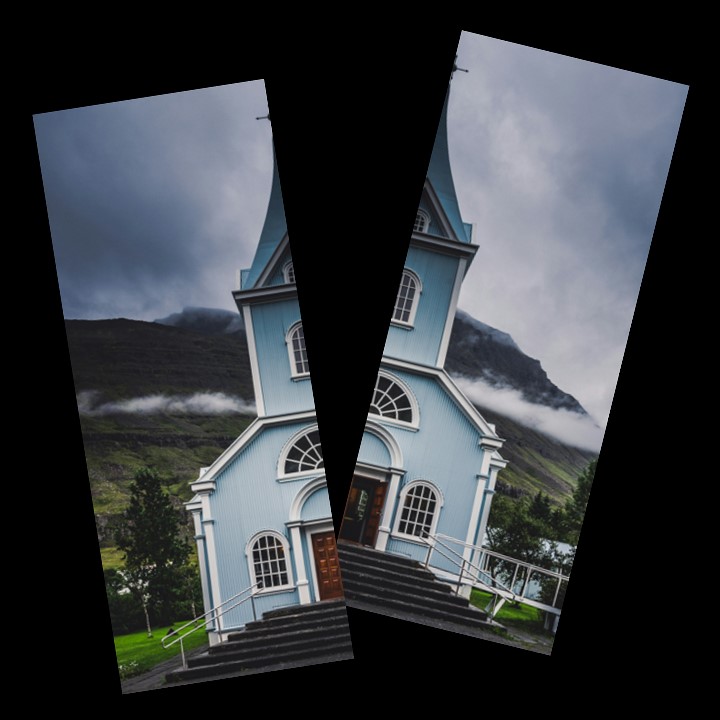
My wife and I have been members of the same congregation for over 30 of its 40+ years of history. As in many churches, there have been some who left dissatisfied or disgruntled over some issue, such as worship style, matters of personnel, or pandemic policy. But none of this is unusual. In fact, I suspect that in many congregations, you can reliably expect a few folks to leave every time there’s a tithing sermon.
Actual church splits, however, are messy, painful affairs. Some leave the congregation in anger or disgust, and feel completely justified in doing so. Those who are left behind to pick up the pieces are hurt and confused. Worse, in many cases, the exodus of members solves nothing. The problem still exists, and it may take months or years for the church to figure it out and get back on track. It can be a time of anxious uncertainty, and people need a strong and credible voice of pastoral encouragement.
The voice, perhaps, of someone like the apostle John.

JOHN HASN’T MENTIONED it in the letter yet, but people have left the community. He doesn’t have to mention it — everyone already knows, and it’s one of his reasons for writing. Reading between the lines of the letter, we can easily imagine that people have been unsettled by the ideas of those who left, and troubled by the ensuing schism. And of course, even if all the people who were teaching and embodying bad theology had left, their ideas would have lingered.
Knowing that the people were in need of encouragement, John addresses them directly:

I am writing to you, dear children,
because your sins have been forgiven on account of his name.
I am writing to you, fathers,
because you know him who is from the beginning.
I am writing to you, young men,
because you have overcome the evil one. (1 John 2:12-13, NIV)
Then, he nearly repeats himself, in some cases verbatim:
I write to you, dear children,
because you know the Father.
I write to you, fathers,
because you know him who is from the beginning.
I write to you, young men,
because you are strong,
and the word of God lives in you,
and you have overcome the evil one. (vs. 14)
These verses stand out because of the repetition. Though John varies the wording slightly, verse 14 follows the exact same structure as verses 12 and 13. If you look at these verses in your Bible, they may be set off from the others in a way that suggests that he’s quoting (loosely or otherwise) some other source. Perhaps; we just don’t know.
Still, it might help to remember that John is writing in the context of an oral culture in which his letter would probably have been read aloud. Think of it this way. His words may seem unusual when we read them in print — but can you imagine them being preached from a pulpit? That kind of repetition is a common rhetorical device; I can imagine a preacher pounding the pulpit for emphasis near the beginning of each line.
John addresses himself to what sounds like three groups of people: first, his “dear children” (the words in verse 12 and 14 aren’t identical, but synonyms), then “fathers,” then “young men.” He’s already used the term “dear children” at the beginning of the chapter, where it applied to everyone, so we needn’t see him as having separate things to say to three separate groups of people. Indeed, much of what he says by way of encouragement reflects other things he’s already written earlier in the letter. It’s as if to say, Remember how I said that some people are claiming things that show they don’t really know or have a relationship with God? Relax: I don’t mean you. In fact, just the opposite: you’ve been faithful, and I want to remind you of that.
Moreover, because John is clearly using the word “children” metaphorically, the words “young men” and “fathers” may be metaphors as well. It’s less about people’s age or stage of life, and more about their maturity in the faith. If so, then John is recognizing that some folks in the community are relative babes in Christ and may be more confused and disturbed by the recent controversies. Others, namely the so-called “fathers,” have been believers for a while. Thus, while John writes his own words of encouragement, he probably also hopes that the “fathers” of the group will encourage and mentor the “children.”
THAT MIGHT BE a good and sobering reminder for us. Too many Christians carry with them the pain of watching their church families split. And unfortunately, it was the people who were supposed to be the leaders, the mature ones, the “grownups” who were at the center of the controversy. The conflict may have begun as something small. But small disruptions to a relationship grow when they’re not handled well. Somewhere along the way, leaders lost sight of their responsibility as leaders to set a good example for others, to model what it means to love one another even in the midst of conflict.
So if you’re one of the grownups, don’t forget: the kids are watching. Don’t do things that will make them want to leave, too.
 Squinting through Fog ("The Fog Blog")