

AS I THINK I’ve mentioned before, I grew up in the suburban outskirts of a large American city. I’ve spent almost no time whatsoever on a farm. And outside of a petting zoo or two, I’ve had no direct experience of sheep — which might be a good thing, considering I’m allergic to wool. But for Micah and his contemporaries, sheep and shepherds were a normal and taken-for-granted part of the landscape, as they still were by the time of Jesus.
We’ve already seen how previous oracles of hope in Micah have used the dovetailed metaphors of God’s people as sheep, and God as their Shepherd-King — portraying God as the one who guides, provides for, and protects his vulnerable and wayward flock. In Micah 2, for example, the prophet begins by lambasting the people for their selfish, arrogant, and unjust ways. The chapter ends, however, with a promise from God to gather and lead the flock. Similarly, in Micah 5, we’re given an oracle pointing forward to a ruler who will arise from Bethlehem to “shepherd his flock in the strength of the LORD” (vs.4), a prophecy that deepens our understanding of Jesus’ claim in John 10 to be the Good Shepherd.
And now, once more before the book of Micah ends, we’re given another reference to God as shepherd. This time, it comes as a prayer to God, a plea from the sheep to their shepherd. It’s as if, having heard the prophecies, having humbly accepted God’s judgment, the people beg God to do what he has promised through the prophet:
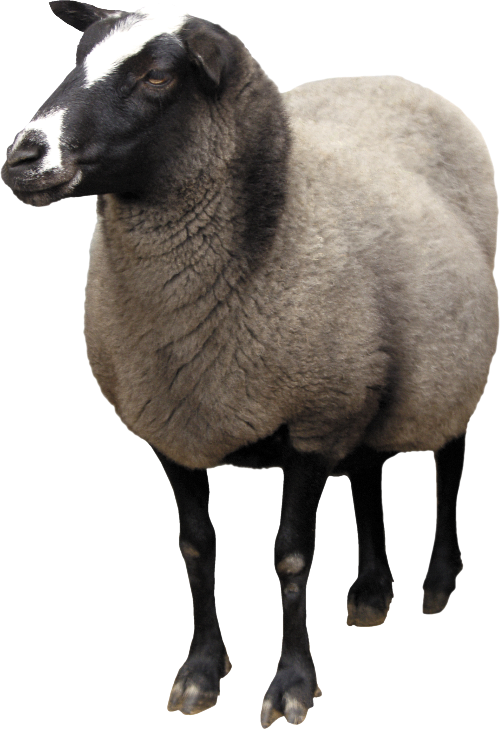
Shepherd your people with your staff,
the flock of your inheritance,
which lives by itself in a forest,
in fertile pasturelands.
Let them feed in Bashan and Gilead
as in days long ago. (Mic 7:14, NIV)
The word translated as “forest” has been used twice before in the book. In Micah 3:12, it was used to describe the “thickets” that would overgrow the temple grounds after Jerusalem had been reduced to rubble by the Babylonians. But the word is also used in Micah 5:8 in the context of the triumph of “the remnant of Jacob” over their enemies. Thus, here in chapter 7, the reference to a forest may have both negative and positive overtones as it echoes the previous oracles. As the people pray, they remember the oracles of doom and the oracles of hope, and pray for the second to finally emerge from the first.
. . .
THE NAMES BASHAN and Gilead may be unremarkable place names for us, but they would have had deep resonance for those listening to Micah’s words. Both are associated with the so-called Transjordan, the region east of the Jordan River. The territory was eventually occupied by the tribes of Reuben and Gad, as well as the half-tribe of Manasseh (see Num 32:33-42). The land there apparently provided excellent grazing for Reuben and Gad’s sizeable herds and flocks — so good, in fact, that the men were at first reluctant to leave the land even temporarily to cross the Jordan with the other tribes in battle against the Canaanites. In a culture that puts so much stress on family loyalty, that says a lot about how good the land must have been.
And perhaps most pertinently, we should note the following prophecy of Jeremiah against Babylon. A whole century after Micah, the exiled people of Judah get the good news that God will forgive them, and bring a remnant back to the pasturelands of Bashan and Gilead:

“I will punish the king of Babylon and his land
as I punished the king of Assyria.
But I will bring Israel back to their own pasture,
and they will graze on Carmel and Bashan;
their appetite will be satisfied
on the hills of Ephraim and Gilead.
In those days, at that time,”
declares the Lord,
“search will be made for Israel’s guilt,
but there will be none,
and for the sins of Judah,
but none will be found,
for I will forgive the remnant I spare.” (Jer 50:18-20)
The time of punishment and exile will be over. All will be forgiven. God will punish Babylon instead, and bring a remnant of Judah back to the rich pasture they once knew.
. . .
THE PRAYER IN Micah 7, together with the verses before it, is a plea to return to “the good ol’ days.” Of course, as many have said in different ways, the good old days may not have been as good as we remember — they just seem that way in comparison to the way things are now. Think, for example, of how the people of Israel behaved soon after their miraculous escape from Egypt through the Red Sea. In their hunger and thirst, they began waxing nostalgic about the plentiful Egyptian cuisine they left behind, as if they had been dragged out into the wilderness against their will.
Well, that’s gratitude for you.
Still, I imagine that the language and imagery of texts like Psalm 23 — “The LORD is my shepherd” — would resonate deeply with Micah and his contemporaries. People in exile dreaming of what once was and what they hope will be again might easily think of lush, green pastures. They look forward to the day of their redemption. And as we’ll see, they do so against the background of what God has done in the past.
 Squinting through Fog ("The Fog Blog")