

IT’S EASY TO be cynical about politics. Throughout human history and around the globe, we continue to witness leaders who rise to power on a platform of lies and half-truths, and then wield that power toward their own selfish ends. We know that this isn’t the way it’s supposed to be. Political leaders should be public servants who always keep the good of others in mind. And often, they do. But even people who seem to have the best of intentions at first can lose their way.
Imagine, then, someone writing a book of political theory that teaches, That’s just the way it is, folks. In fact, leaders need to be willing to do whatever it takes to establish order, even if it means deception, violence, or systematically eliminating your rivals. Can you imagine such a treatise? And what if it became a best-seller?
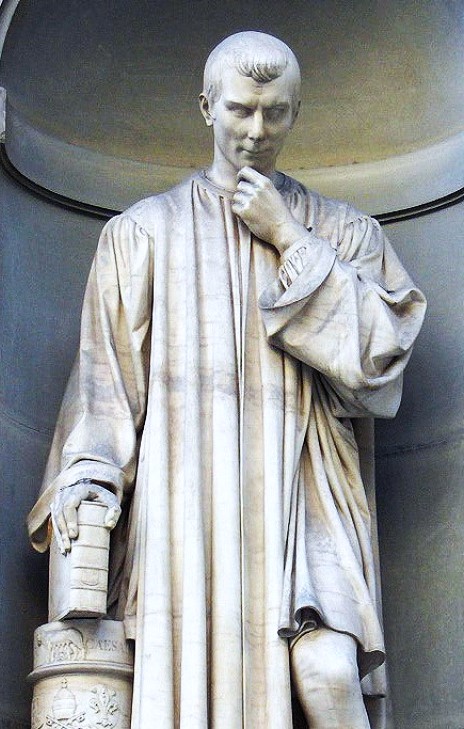
The book has already been written. It was published back in the 16th century, and is still studied today.
Niccolò Machiavelli was an Italian statesman and philosopher. Though interpretations of his work vary, what I’ve described above captures some of the main ideas of his most famous book, The Prince. Indeed, psychologists have identified and studied a personality trait named in his honor: Machiavellianism. People who are high in the trait seem to care only about themselves and are willing to manipulate others in whatever way necessary to get what they want.
When I read Micah 7, I imagine that a kind of Machiavellianism has infected the entire kingdom of Judah from the top down. Anyone who has any kind of power or influence uses it for selfish ends. We’ve seen how Micah, in verse 1, laments the absence of spiritual fruit in Judah. He then sharpens the point in verse 2:
The faithful have been swept from the land;
not one upright person remains.
Everyone lies in wait to shed blood;
they hunt each other with nets. (Mic 7:2, NIV)
The word translated as “faithful” is important. Think back to Micah 6:8, where the prophet declared that God doesn’t want the people’s sacrifices, he wants a people who “love mercy.” The word “faithful” here is the adjective form of that word “mercy.” Throughout the Old Testament, God is described as endlessly faithful to the covenant, and that faithfulness is expressed in acts of kindness and mercy. Micah is essentially telling the people that their faithfulness should reflect the faithfulness of God; they should be kind and merciful as he is kind and merciful. But such faithfulness, sadly, is entirely missing from the land.
This lack of righteousness isn’t a private matter. Micah’s imagery is violent; he portrays the people as predators, hunting each other like animals. The New International Version tries to keep the translation gender-neutral by saying “they hunt each other,” but that leaves out an important nuance. Micah’s Hebrew can be translated more literally as “every man hunts his brother.” The rampant injustice Micah sees, in other words, is made more poignant by the fact that predators and prey alike are all supposed to be part of the same family of God.
By now, some of Micah’s description of corruption should sound familiar:
Both hands are skilled in doing evil;
the ruler demands gifts,
the judge accepts bribes,
the powerful dictate what they desire—
they all conspire together.
The best of them is like a brier,
the most upright worse than a thorn hedge. (vss. 3-4a)
The phrase “both hands are skilled in doing evil” suggests that evil is what these corrupt leaders do best. The powerful not only look for ways to line their own pockets, they “conspire” together. The word is only used once in the entire Old Testament. At root, it means “to weave.” Together, powerful people are weaving powerful plots, and it’s the people without power who are most likely to be victimized.
But is the problem only with the leaders? Perhaps mostly: as the leaders go, so goes the nation. But the responsibility and blame are not theirs exclusively. When Micah turns his attention to the “best” and “most upright,” he may be thinking about the entire nation. Recall that in verse 2, he lamented that there was not a single “upright” person in the land. And here in verse 4, he uses the word “upright” again, saying that even the person who might seem the most upright compared to others is still like a hedge of thorns (another word that only appears once in the Old Testament).
If Micah is referring primarily to the powerful here, to the leaders of Judah, he might be saying that they have the powerless fenced in, or are barring them from receiving justice. If he’s referring to the people as a whole, however, he might be saying that things are so far gone in Judah that there is no love of neighbor left; everyone is a thorn in everyone else’s side. People have become so good at being bad that even the best they have to give is still the worst.
And how might we know if Micah’s gloomy picture applies to all the people of Judah? Because of what he says next, which is even gloomier.
 Squinting through Fog ("The Fog Blog")