
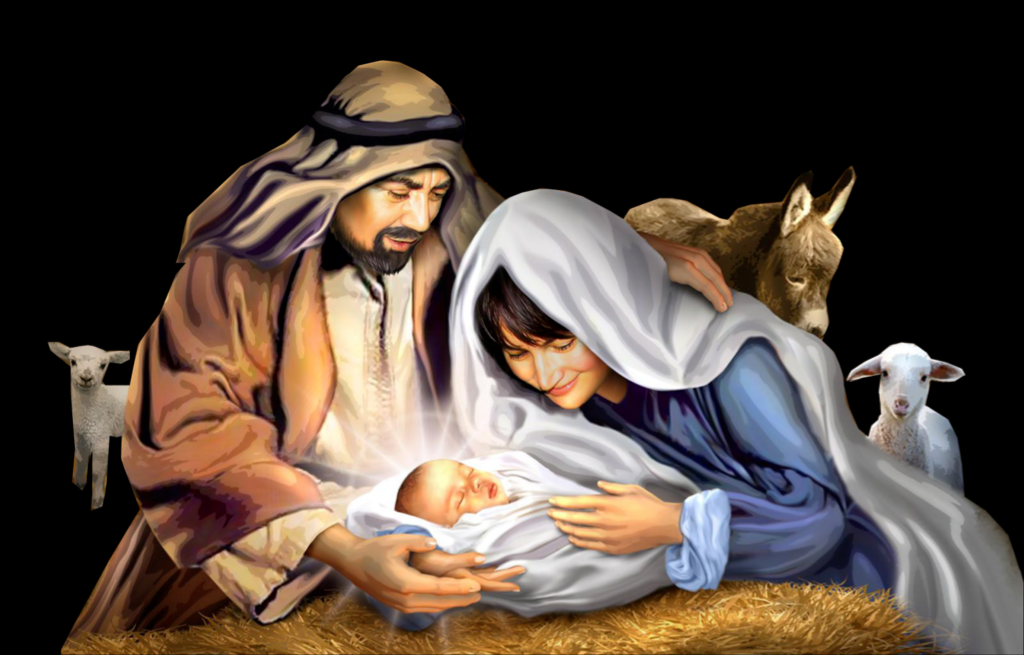
O little town of Bethlehem,
How still we see thee lie!
Above thy deep and dreamless sleep
The silent stars go by.
Yet in thy dark streets shineth
The everlasting light;
The hopes and fears of all the years
Are met in thee tonight.

Christmas. For many of us, it’s a magical time of year, filled with memories from childhood. I say that against the background of a hard truth: in America especially, Christmas has become over-commercialized and materialistic, an industry that casts an almost mystical aura around the season that induces people to buy. The weight of that mythological image — of creating the “perfect” Christmas — can be crushing to harried parents and people who don’t have the economic resources.
And yet, that doesn’t tell the whole story. Not all of the wonder is wrapped in shiny paper and tied with a bow. Beyond the trees and houses decked with lights, there’s still something about Christmas that’s a bit like looking up at the stars on a clear night, a sense of transcendence for which neither a credit card nor an Amazon account is necessary.
Over the last few posts, we’ve been looking at the passage in Micah 5 that was cited by Herod’s advisors in Matthew’s version of the Christmas story. And having done so, today we find ourselves celebrating the first Sunday of the season of Advent. No, I didn’t plan it that way; I’m not that clever. But I don’t want to leave that passage from Micah without giving us something to think about, something to reorient our minds and hearts as we prepare to welcome the Christ-child.
This is the time of year where radio stations are taken over by Christmas music: everything from traditional hymns to songs about snow and romance and Grandma getting run over by a reindeer. If you go to the mall, the music plays on an endless loop in the background, again, trying to encourage the commercial version of the Christmas spirit that loosens the purse strings. We hardly pay attention to the lyrics, even when the lyrics are worth pondering.
When I think of Micah’s prophecy, I naturally think of Bethlehem. Then I remember the 19th century Christmas carol based on that text: “O Little Town of Bethlehem.” Bethlehem would indeed have been a little town, not a tourist destination known for its shops, restaurants, or amusement parks. Not even for its inns; the popular image of Joseph and Mary being refused a room by an innkeeper is based on an improbable translation of the passage in Luke. Bethlehem’s one claim to fame was that it was the city of David and therefore the prophesied birthplace of the Davidic Messiah.
The song gives us the image of a small town at night. The streets are dark and deserted. The people slumber in their homes as the stars wheel overhead. But in one house, a miracle is happening. A child is being brought into this world of sin, a child who will be light to the world’s darkness. And as the song proclaims, “the hopes and fears of all the years” come rushing together in that one small life.
Against the background of the glitz and glamour of a commercial Christmas, everything about the earthly aspect of the Christmas stories in Matthew and Luke is saturated with humility. The prophesied Messiah, the one for whom the people had hoped for centuries, the one whom some feared might never come, came to us in humble guise: a tiny, squalling baby in a small and unremarkable town. The revelation of the history-changing miracle came first not to God’s people, but to foreign dignitaries who traveled months to find the child. The announcement came first not to kings and princes, not to people with power and influence, but to shepherds tending sheep.
For some, the Christmas season means hustle and bustle. And don’t get me wrong: I’m not condemning your celebrations or family traditions. I only invite you to create the time and space to allow God to speak to you of miracles of hope. Because chances are, we’ll need to be in a humble place of stillness to hear.
 Squinting through Fog ("The Fog Blog")