

There’s some debate over the origin of the phrase, “drinking the Kool-Aid.” Some attribute it to Tom Wolfe’s 1968 book, The Electric Kool-Aid Acid Test, a chronicle of friends taking a road trip across America as they tried to expand their consciousness by drinking Kool-Aid laced with the hallucinogenic drug LSD (remember, it was the 1960s). The more ominous association, however, came ten years later, with the infamous Jonestown Massacre of 1978.
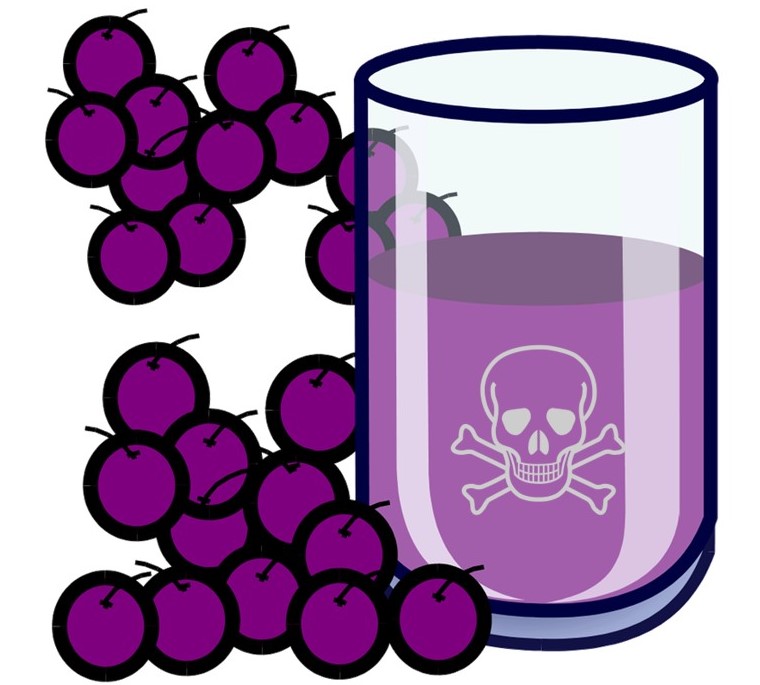
Jonestown was a settlement established by cult leader Jim Jones in Guyana. The cult was being investigated by the U. S. government, with congressman Leo Ryan leading the investigative team. When Ryan tried to help defectors escape the cult, he was assassinated. Soon after, Jones, by now unhinged, ordered the cult members to commit what he called “revolutionary suicide” by drinking a grape-flavored soft drink laced with cyanide. The soft drink, called Flavor-Aid, was a cheaper knock-off of the better known Kool-Aid. But it was later misidentified in the media as Kool-Aid and the idea of “drinking the Kool-Aid” stuck. All in all, over 900 people died that day — including children who didn’t know they were drinking poison. It wasn’t just a misguided mass suicide; it was murder.
Thus, “drinking the Kool-Aid” has come to have a number of negative meanings. Mostly, it suggests how people are often too willing to swallow the party line, even if it seems obvious to others that the beliefs are dangerous or delusional.
At the end of the previous post, I suggested that the leaders of Judah may have shared a mass delusion. I said this because of Micah’s own words in the oracle. But I haven’t shown you the whole oracle yet, and in particular, I didn’t finish verse 11. Here now is the whole of verse 11, this time from the Common English Bible:
Her officials give justice for a bribe,
and her priests teach for hire.
Her prophets offer divination for silver,
yet they rely on the Lord, saying,
“Isn’t the Lord in our midst?
Evil won’t come upon us!” (Mic 3:11)
What I hear in this is the deeply ironic flip side of the people’s past faithlessness, when they tested God in the wilderness. Think back to the book of Exodus. In chapter 14, we read of the people’s miraculous escape from the Egyptians through the Red Sea, and in the first part of chapter 15, we’re given Moses and Miriam’s triumphant songs of celebration. By the end of that chapter, however, the people are already grumbling from thirst. God, of course, provides.
In chapter 16, they grumble for food, and God provides manna and quail. In chapter 17, it’s water again, and again God provides: at his command, Moses strikes a rock with his staff, and water gushes forth. Moses names the place Massah and Meribah — words meaning testing and quarreling or strife — because the people argued with Moses and dared to wonder “Is the LORD really with us or not?” (17:7). This, despite the Red Sea, despite miraculous and generous provisions of food and water.
In Micah’s situation, however, the logic has flipped. The leaders are no longer wondering if God is among them; instead, they are presuming that God is among them, and doing so in a delusionally self-justifying way. This is the poisonous Kool-Aid they drink in collusion with each other: We are rich because we are blessed. We are God’s people, and this is his city. What could possibly happen?
It’s easy to see how people in power would prefer this message to Micah’s, how the message could become something of a reassuring mantra. “Isn’t the LORD in our midst?” they say to one another. It’s a rhetorical question. The taken-for-granted answer is, “Well, of course he is!” And off they go, continuing to do works of injustice, all the while believing their own lies.
It reminds me of what the prophet Jeremiah will eventually say to the people long after Micah, when the destruction of Jerusalem is finally at hand:
Don’t trust in lies: “This is the LORD’s temple! The LORD’s temple! The LORD’s temple!”… And yet you trust in lies that will only hurt you. Will you steal and murder, commit adultery and perjury, sacrifice to Baal and go after other gods that you don’t know, and then come and stand before me in this temple that bears my name, and say, “We are safe,” only to keep on doing all these detestable things? (Jer 7:4, 8-10)
Let’s not make the same mistake. It is an undeserved, unearned privilege to be the people of God, and we are called to be his representatives and demonstrate his character. We cannot presume upon God’s grace, do as we please, and expect God to look the other way. And as we’ll see, Micah’s clear message to these corrupt leaders is: Because you have done these things, destruction is coming.
 Squinting through Fog ("The Fog Blog")