

When you use the word “sin,” what do you mean by it? An intentional act of evil? Breaking a moral rule, intentionally or not? Rebellion against God? All of these are part of what we mean by sin, and over the centuries, theologians have suggested others as well.
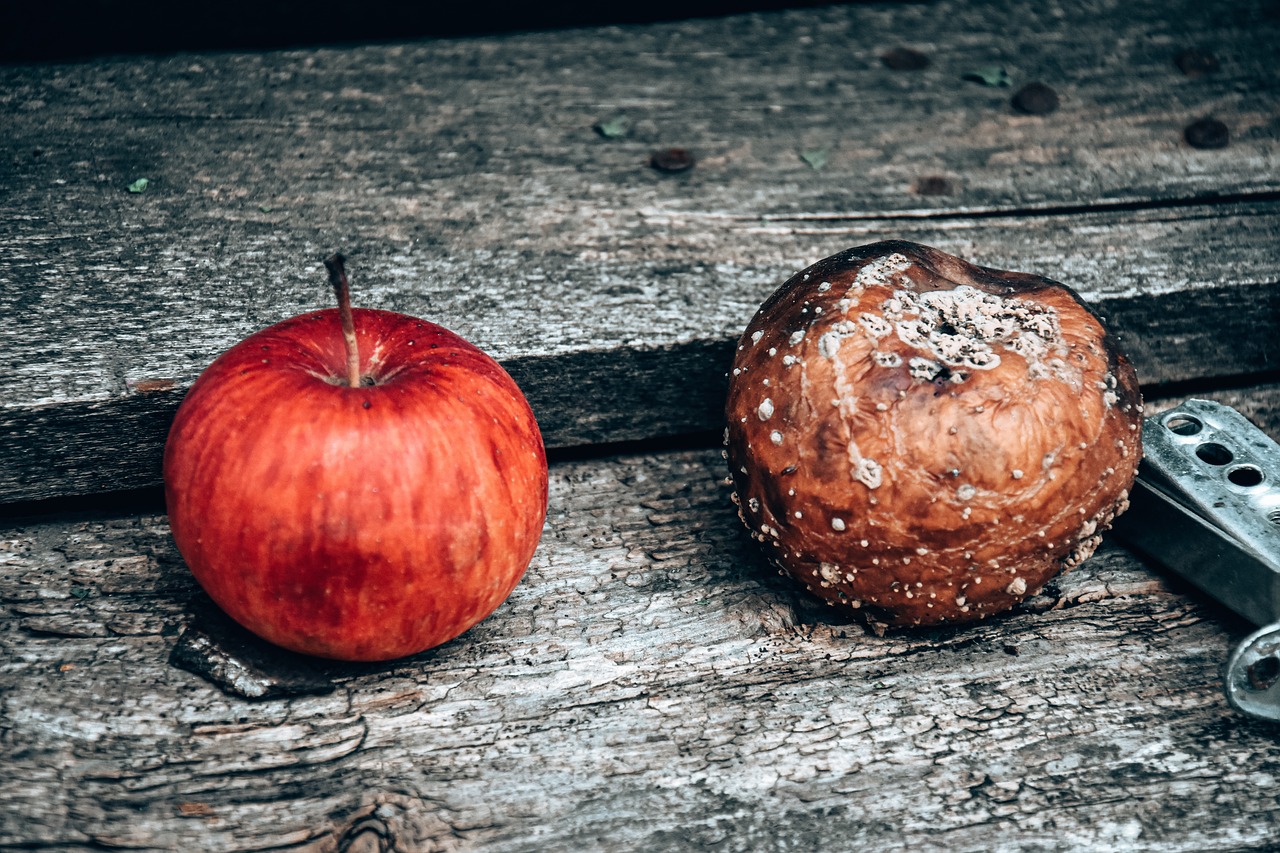
One such alternative is corruption. Think of fruit that’s gone bad, or a beautiful house being eaten away from the inside by termites. Something that was supposed to be good has been spoiled or contaminated, and now it decays. That’s what sin does to God’s creation.
And that’s what sin does to human beings, who were created in God’s image.
In Micah 3, the prophet uses some of his strongest language yet. The images are horrifying; to us, they may seem over the top. It’s a mark, however, of Micah’s passion for justice and his corresponding heartache over the injustice he sees. Remember, he’s lived among the rural poor and seen how the behaviors and policies of the rich have oppressed them. As he preaches in the city of Jerusalem, the Holy City where God’s presence supposedly resides, he sees oppression there too. The city has become corrupt to its core.
Chapter 2, you’ll remember, ended with the hope-filled image of God as the Shepherd-King. The oracle seems to refer to the Assyrian king Sennacherib’s abortive siege of Jerusalem, a miraculous rescue by God. But disaster is still coming. Just as Micah prophesied in chapter 1 that Samaria would be destroyed, so too will Jerusalem suffer the same fate of being reduced to rubble. And why? Because where there should be justice, God finds corruption instead.
Think for a moment of all the positions of leadership and guidance in society, all the people you’re supposed to be able to trust to do the right thing for the right reasons. Isn’t that what we would expect of every elected official? Of every judge? Every pastor?
But now imagine they’ve all become corrupt. More specifically, imagine that they’re all in their own way motivated not by the desire for justice, the passion to do what’s right and good, but by personal gain. Whatever they do or say, even when they’re supposed to be working for the benefit of others, is for their own benefit. This is the corruption in Jerusalem with which Micah is faced.
Even the prophets are only out to make a profit.
And this is where the sense of sin as corruption is important. Sure: some of the leaders in Jerusalem probably got where they were through Machiavellian means. But that’s not necessarily true of everyone in a position of power. Some may have started with good intentions. Or perhaps we should say mixed intentions; they were motivated by some kind of personal gain, but that wasn’t their only motivation. The problem is, without a deep-seated commitment to justice, good intentions are easily corrupted.
Consider again the false prophets who were trying to shut Micah down. As we’ll see, Micah has some rather choice words for them in chapter 3. Should we therefore understand them as just liars and deceivers and nothing more? Possibly. But some of what Micah will say suggests that some of them may actually have had prophetic gifts.
Think, then, of how this adds to Micah’s heartache, his sense of injustice. Imagine Micah discovering that Isaiah, for example, was on the take. Someone he trusted as a colleague in the difficult vocation of prophet had been corrupted by the temptations of wealth. This would be devastating to him.
Small wonder, then, that his words to the false prophets are filled with fire. He feels betrayed by people who used to be colleagues, have turned aside from their calling and can’t see it, and have turned against Micah himself.
Chapter 3 contains three related oracles against corrupt leaders; we’ll tackle them one at a time. But throughout all of them, Micah cries out against injustice. These leaders should all have emulated the goodness of the Shepherd-King and been wise in their dealings with people. But instead, they had become corrupt. And as we’ll see next, the situation had become so bad that Micah can accuse them of eating the innocent alive.
 Squinting through Fog ("The Fog Blog")